
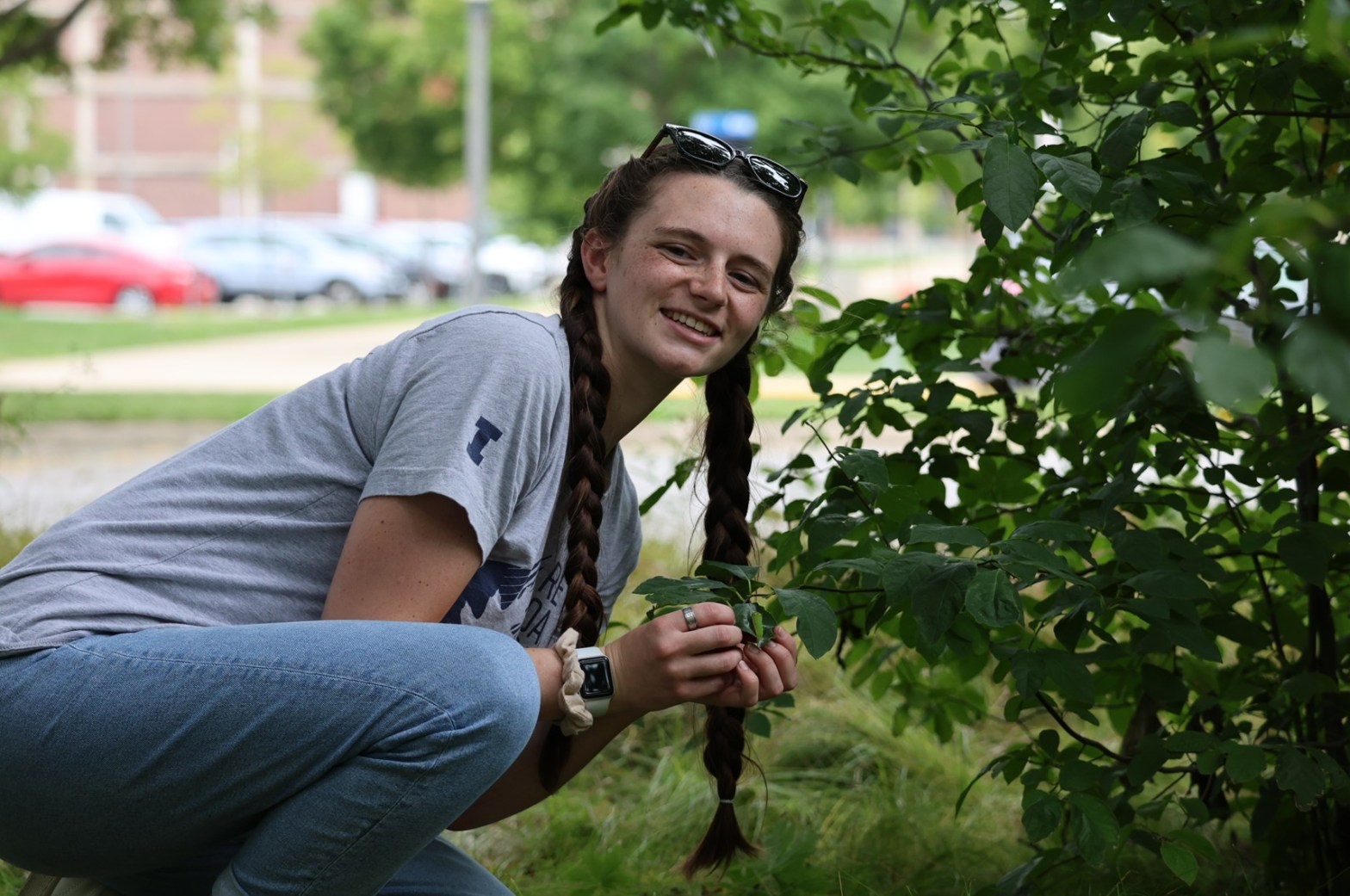
A Little About Me
My name is Traci Bennett, and I am an incoming senior at UIUC. I am currently finishing my Bachelor of Science in Geology with an environmental concentration. I hope to pursue a career in water resources, so being the green stormwater infrastructure (GSI) intern for Illinois Extension/Illinois-Indiana Sea Grant this summer was a great opportunity. The door to possibilities will be wide open with a Geology degree, but up to this point, those possibilities have seemed overwhelming. Getting to know more about GSI and interacting with it has helped me to see the types of careers I would enjoy in the future.
Daily Tasks
My day-to-day work varied depending on what was happening at the Red Oak Rain Garden. On days without events or volunteering, I spent most of my time in the office analyzing Municipal Separate Storm Sewer System (MS4) reports. Many municipalities across Illinois—mainly urban and developing areas—operate under MS4 permits. This means their stormwater runoff travels through a separate sewer system that does not go to a wastewater treatment plant the way household sewage does. Instead, the stormwater discharges directly into local waterways. Permit requirements include annual reports to the Illinois Environmental Protection Agency (IEPA) describing how the communities manage their stormwater. The data from these reports helps measure the success of local programs and enforce water-quality standards under the Clean Water Act.
Learning about the MS4 program was eye-opening. I wasn’t yet familiar with these systems, but I now understand that they play a crucial role in protecting water quality. I also discovered that my own hometown of Johnsburg, Illinois, is an MS4 community. That connection made it more personal because I now understand how stormwater is managed where I live and how I can contribute to those efforts in a meaningful way.
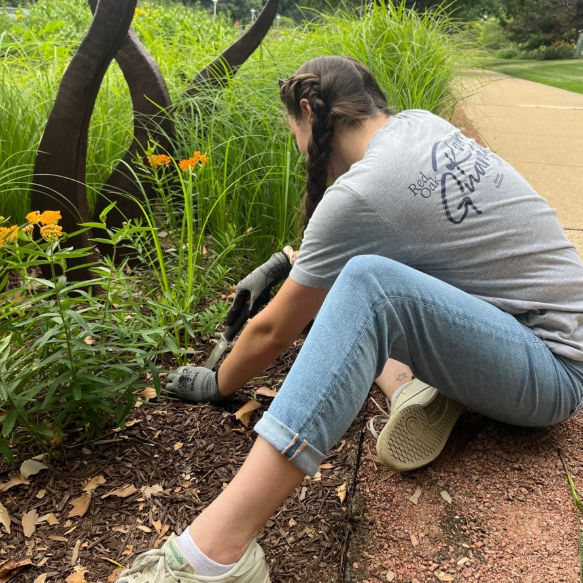
My time at the RORG was a mix of hands-on maintenance, tours, and volunteer hours with our dedicated community led by Maddy. A big part of the work involved regular maintenance, including using a garden torch on the garden’s granite border. This was equally fascinating as it was enjoyable. The process started with blowing away loose debris. Then Maddy would move along the edge with the torch while I followed behind as a safety precaution, using what looked like a mud flap attached to a stick to smother any rogue flames. I thought the reasoning behind this method was fascinating: any debris left on top of the granite will eventually decompose and make the border more hospitable for unwanted plants. It’s a reminder of how earth is always working to turn everything back into soil—so cool!
Leading tours brought a lot of energy to the garden, especially during an event for the Saving FACE group. It was refreshing to watch children’s eyes brighten as they explored the outdoors—hunting for bugs, asking questions, and their excitement when we made our hydrophobic logo appear.
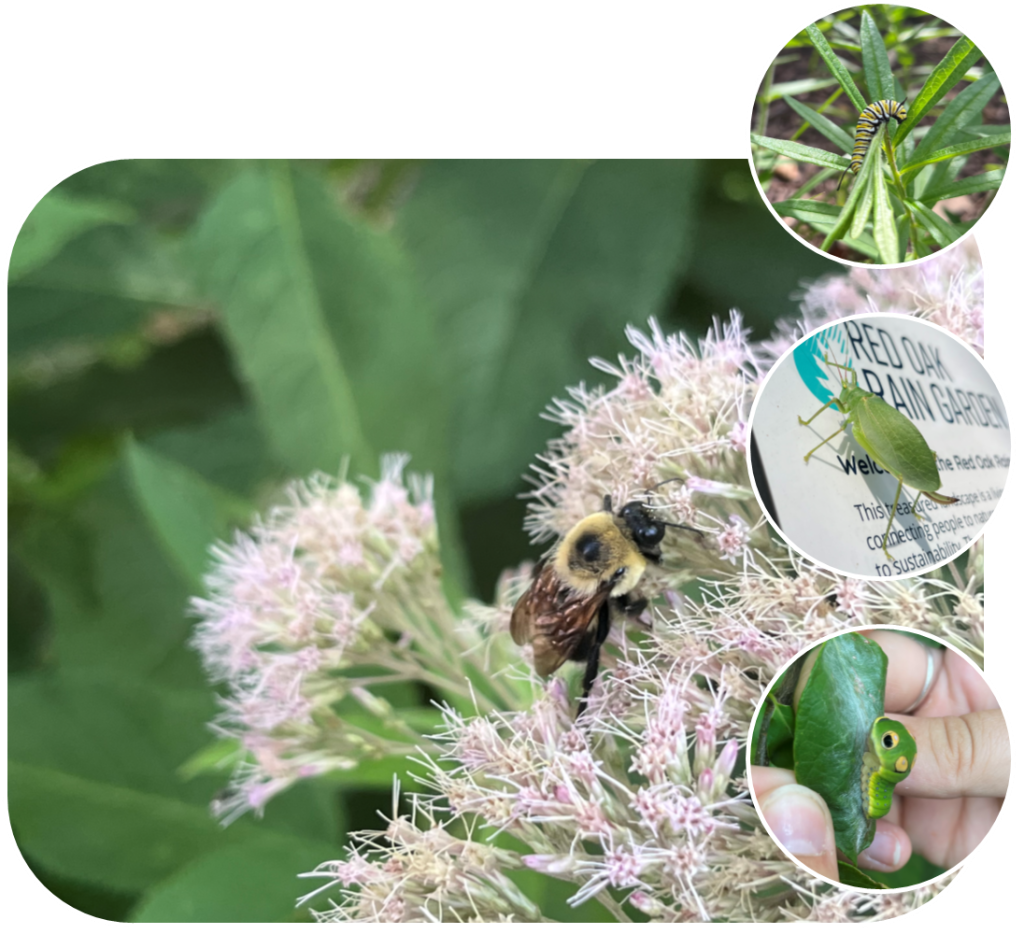
My absolute favorite part of the garden, however, was the volunteer hours. I really enjoyed working side-by-side with our wonderful volunteers, chatting about whatever was on our minds while planting or weeding. Getting up close and personal with the garden allowed me to notice our many critters! This summer, I got to see some katydids, garden spiders, and spicebush swallowtail caterpillars, which I had never seen in real life before.
My Takeaways
Analyzing MS4 reports gave me a reality check on everything that happens behind the scenes so we can turn on a tap and get clean drinking water. What most people never see (or think about) is the long sequence of processes—and the many side quests—that have to be completed before water is both drinkable and reliably available. MS4 reporting is one of those side quests: urban areas are required to track the condition of local waterways by managing stormwater and the pollutants it carries. Doing that work solidified the importance of the field to me. A career in water resources would be fulfilling precisely because the day-to-day tasks, even the less visible ones, help protect a consistent water supply for entire communities.
Working at the Red Oak Rain Garden has been the most fulfilling part of my internship. Whether it was planting, maintenance, or simply chatting with the volunteers, the experience always felt meaningful. I have always been told that if you do what you love, you will never work a day in your life. That idea has stayed with me and played a significant role in my decision to pursue the natural sciences. Finding that sense of fulfillment in the work at the rain garden has honed my interest in the kind of career I want to build.
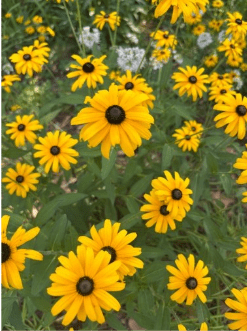
(Rudbeckia fulgida)
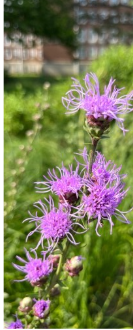
(Liatris aspera)
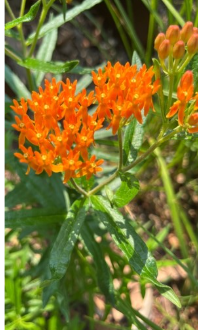
(Asclepias tuberosa)
The time spent with the community volunteers is just as important as the physical work itself. These engagements, however, go deeper than just completing tasks. Volunteer opportunities like this create a sense of belonging and can help volunteers feel rooted in the place they live. University life can become intense and isolating with the constant cycle of deadlines, exams, and other academic pressures. This makes it easy to see the town only through the lens of campus. However, these opportunities can help to take you outside of that bubble and let you experience Champaign-Urbana as a real community rather than simply a university. Then, the place begins to feel less intimidating and more like home—the kind of everyday life that waits on the other side of a degree.
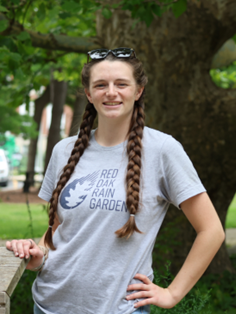
Traci Bennett is a senior at the University of Illinois studying Geology with an Environmental Concentration. She plans to use her degree to pursue a career in water resources, specifically related to water quality. She enjoys working outdoors with nature and learning about the many ways green stormwater infrastructure can help to protect water quality. In her free time, she enjoys going on long walks and practicing yoga.

