
As 2025 comes to a close, the Red Oak Rain Garden (RORG) has continued to flourish as both a living landscape and a hub for learning, creativity, and community connection. This year, the RORG Team—Eliana Brown, Layne Knoche, Maddy Craft—cared for the garden and welcomed people into it through stewardship, student engagement, public events, and new signage. We strengthened RORG’s role as Illinois Extension demonstration site for stormwater management, education, and outreach, working in the Natural Resources, Environment, and Energy (NREE) Program and Illinois-Indiana Sea Grant under Dr. Shibu Kar.
RORG thrives because of its people. Our community of volunteers, students, artists, educators, and visitors all contributed to RORG through hands-on stewardship, creative expression, or contemplative observation.
Thank you to everyone who spent time in the rain garden, supported our work, and/or helped share its story. Hope you enjoy our look back at 2025, season by season, highlighting the people, projects, and moments that made this year at RORG unforgettable.
Many of our projects and events this year were made possible through support and partnerships with the American Water Charitable Foundation, the Student Sustainability Committee, and numerous campus units, including Facilities & Services, iSEE, FAA, Housing, Parking, Civil & Environmental Engineering, and the Illinois State Water Survey. We appreciate you!
Late Winter
The RORG Team began 2025 with behind-the-scenes work that set the tone for the seasons ahead while providing winter rain garden education. We focused on planning the year’s outreach, upgrades, and long-term monitoring. We knew it was going to be a busy year!
Rain Garden Rumble crowns champion Virginia Bluebells
Our sixth annual Rain Garden Rumble education kicked off in March and reached an estimated 14,000+ people, introducing new audiences to rain gardens and providing native plant literacy via social media. This year’s public-vote competition featured 28 species. Virginia Bluebells emerged as the top champion, edging out fierce competitor Cardinal Flower. Congratulations to Linda Bailey and Jamie Viebach, who tied for the participant with the best predictive bracket.
Beyond the Rumble, the RORG team shared rain garden and green stormwater infrastructure education through Extension programs, webinars, and community presentations throughout the early months of the year. These efforts reinforced the garden’s role as a dynamic teaching landscape—extending its impact well beyond campus borders.
RORG signage brings fresh visibility to RORG!
One of the most exciting projects for us was final planning for the spring installation of RORG signage. After years of thoughtful consideration and planning, the rain garden became home to two new signs thanks to generous support from the American Water Charitable Foundation and the Student Sustainability Committee.
An interpretive sign and a sculpture identification plaque not only beautify the space but also deepen the public’s connection to RORG.
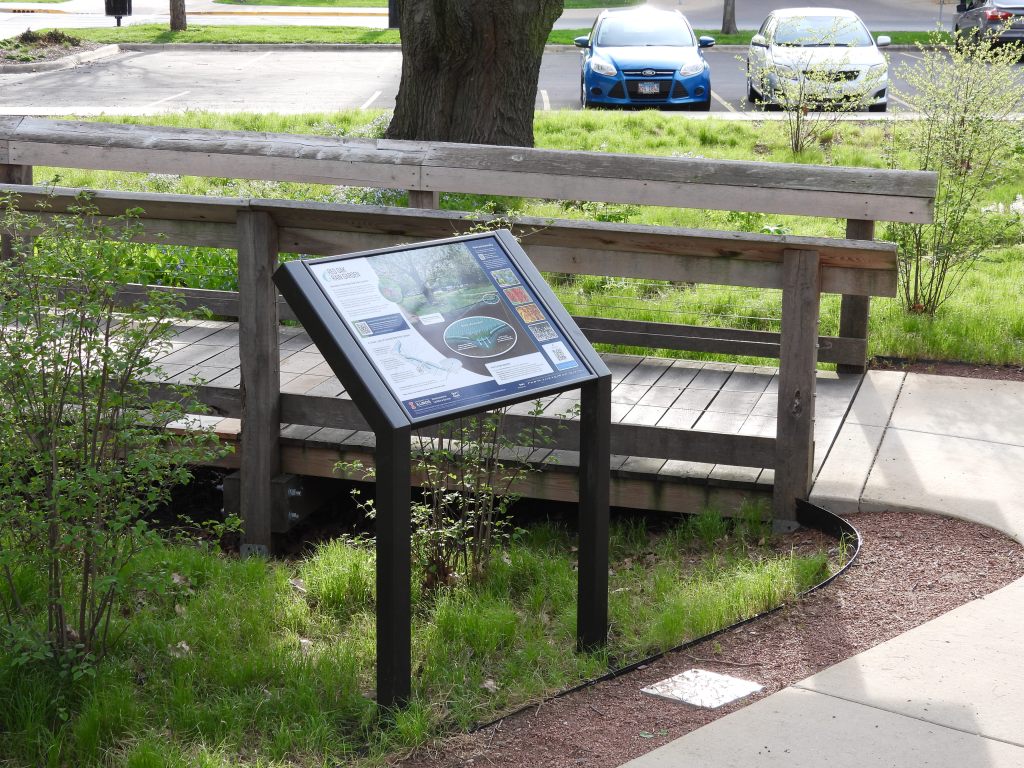
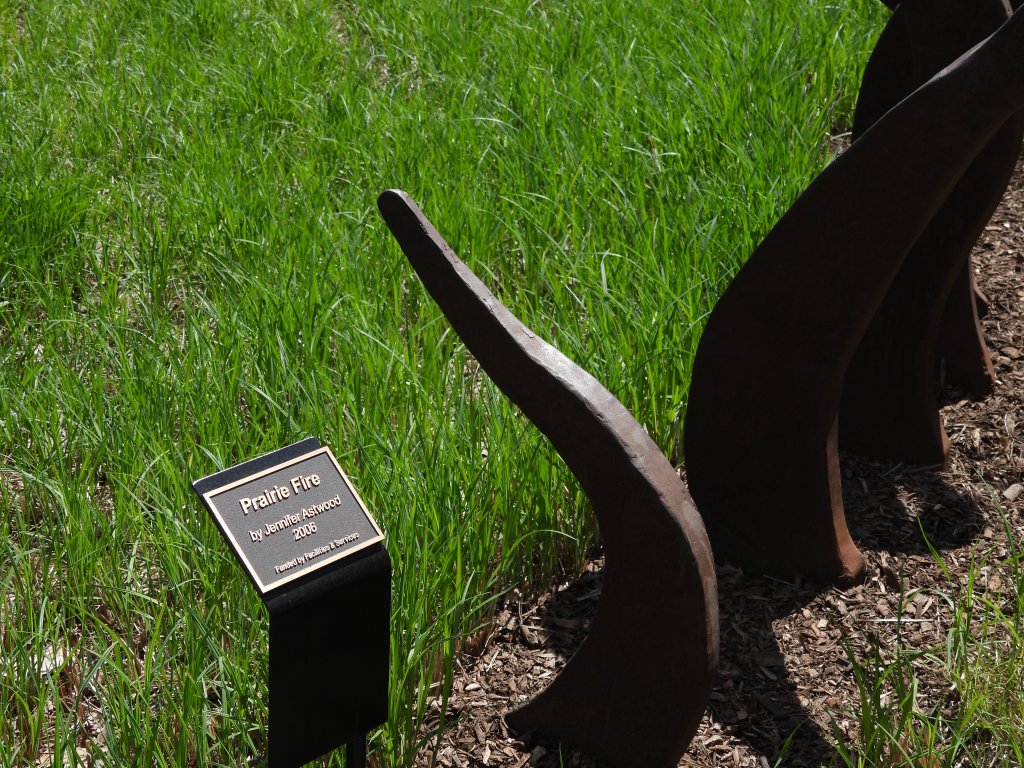
Layne worked closely with Eliana and graphic designer Joel Davenport to develop a timeline that ensured installation before the grant deadline of April 30. A focus group composed of 9 Extension professionals, Master Naturalists, and community members reviewed the content to ensure it was accessible, accurate, and engaging. In total, we collaborated with 48 individuals across campus and the community to bring the signage to fruition by mid-April!
True to RORG’s mission, the sign reflects a commitment to universal design, ensuring that people of all abilities can access and benefit from the information it offers. Encouraged by Pat Charlebois, Associate Director of Outreach at Illinois-Indiana Sea Grant, the team explored ways to integrate accessibility into the sign. With guidance from campus experts at Disability Resources and Educational Services and at Facilities & Services, the final design includes a Braille line that directs visitors to a QR code, where they can access an audio tour. It’s a small feature with a big impact as the first outdoor Braille signage on campus.
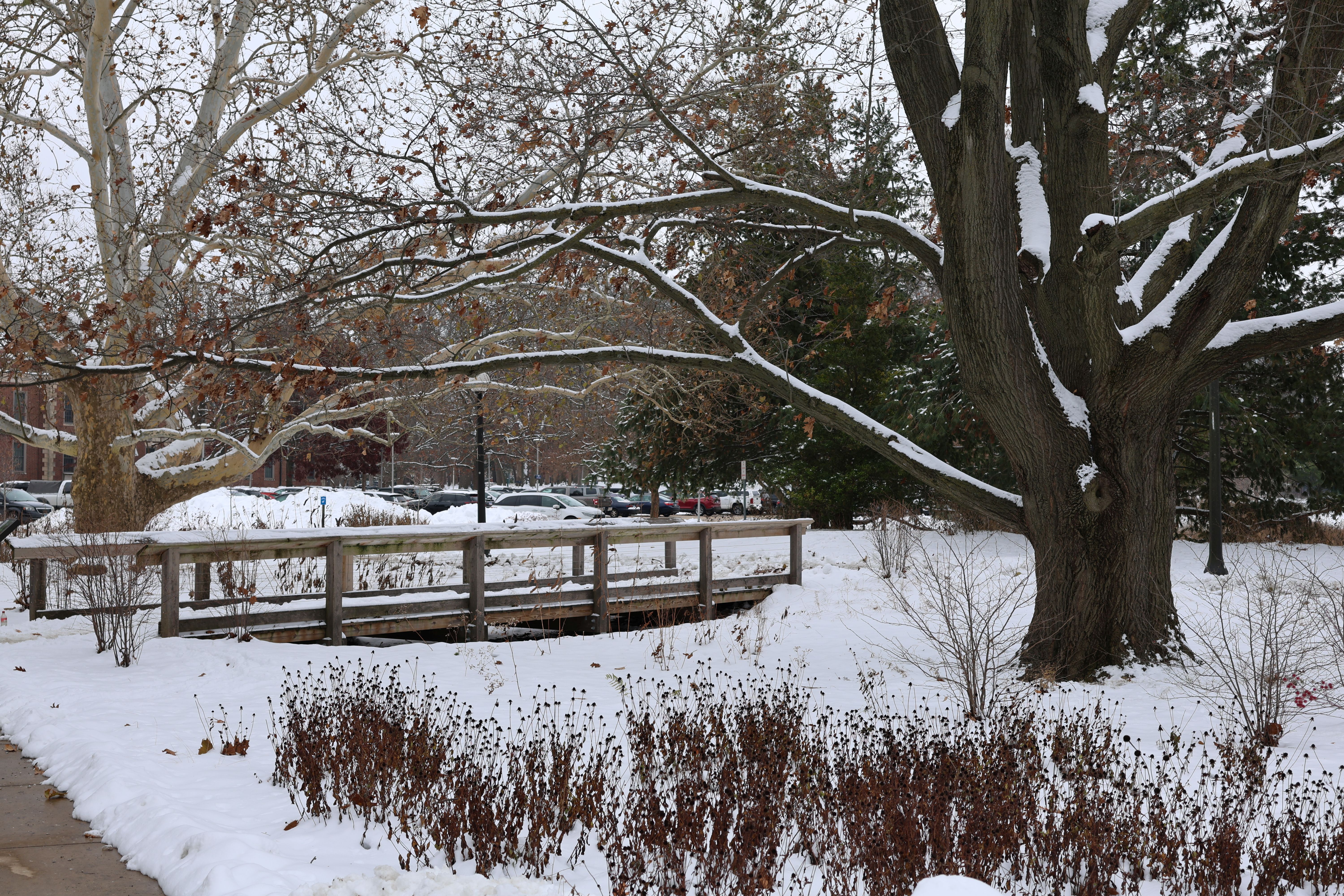
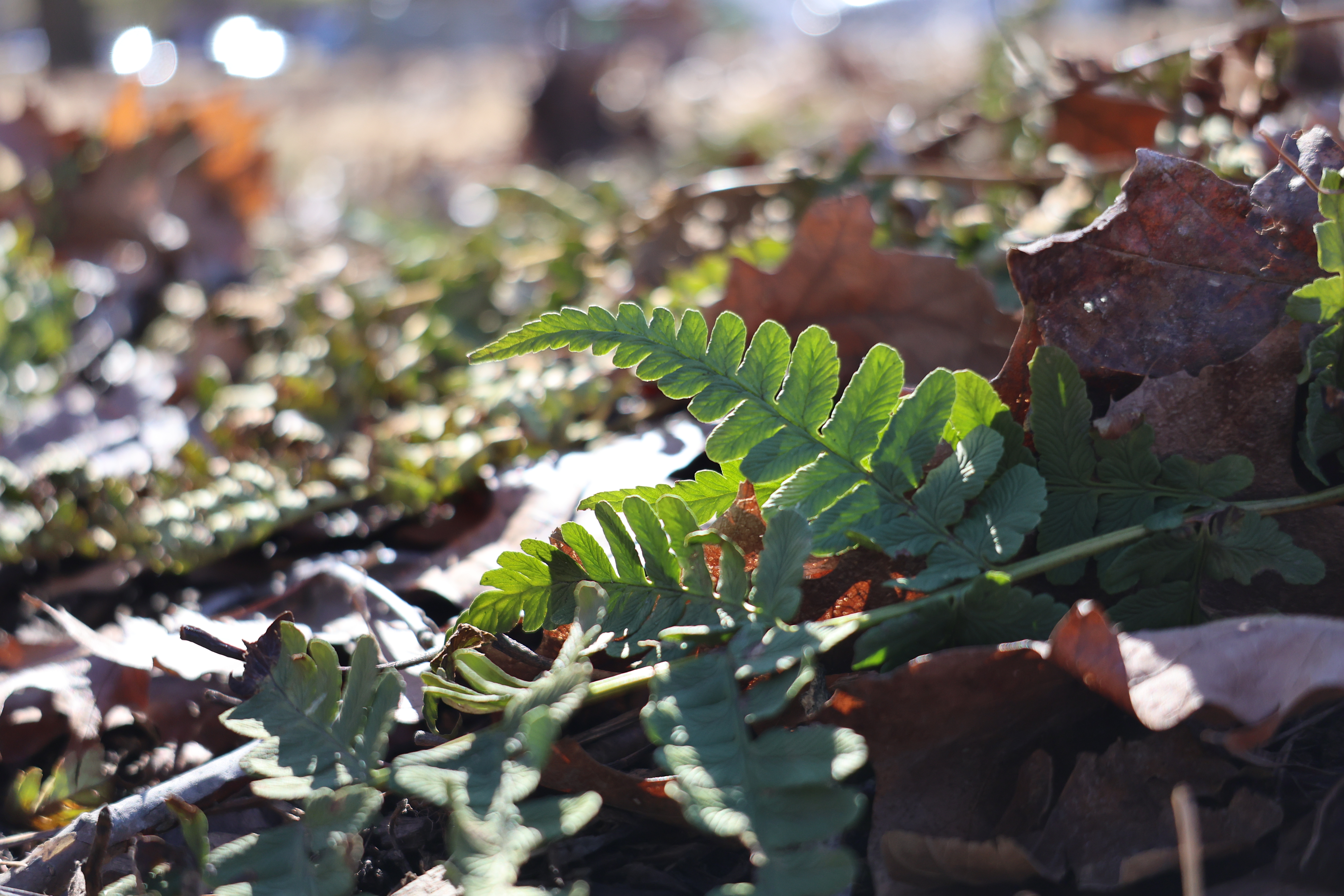

RORG is so pretty with a layer of snow! As winter loosened its hold, early stewardship work began with volunteers helping with seasonal cleanup. Photos by Maddy Craft and Clare Smith.
Spring
RORG’s sustainably-sourced bridge repaired
Eliana coordinated with Facilities & Services and Allerton Park to complete much-needed repairs to RORG’s iconic bridge. Built in 2021 using sustainably sourced black locust wood from Allerton, the bridge included one support post identified during construction as needing eventual replacement—and 2025 was the year! Four warped boards were also identified and replaced during this repair.
New black locust pieces were installed to ensure the bridge remains safe and welcoming for all visitors. A big thank-you to Facilities & Services and Allerton Park for their partnership and for completing these repairs in time for the growing season.
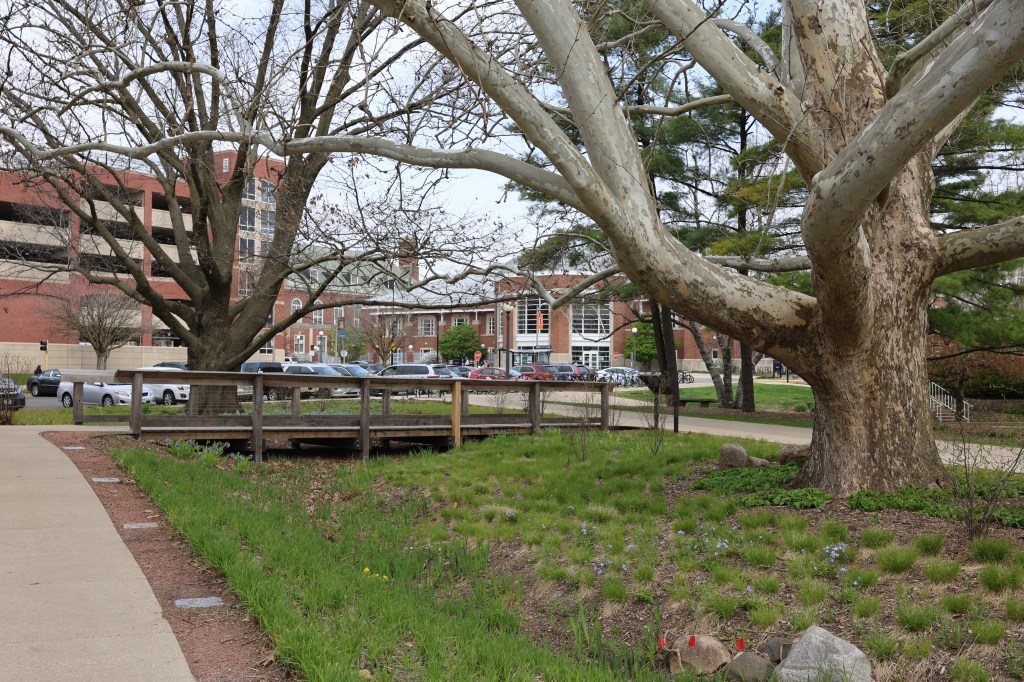
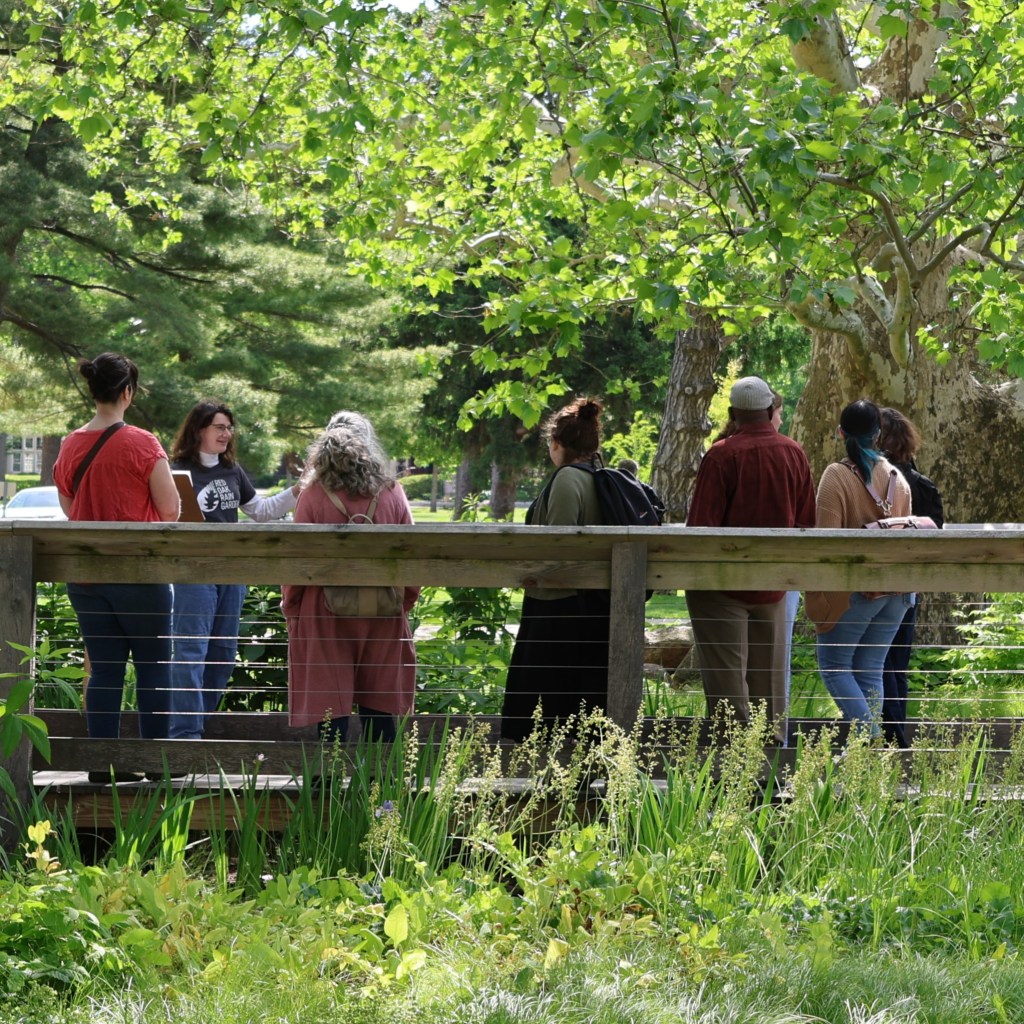
Public engagement via spring garden tours
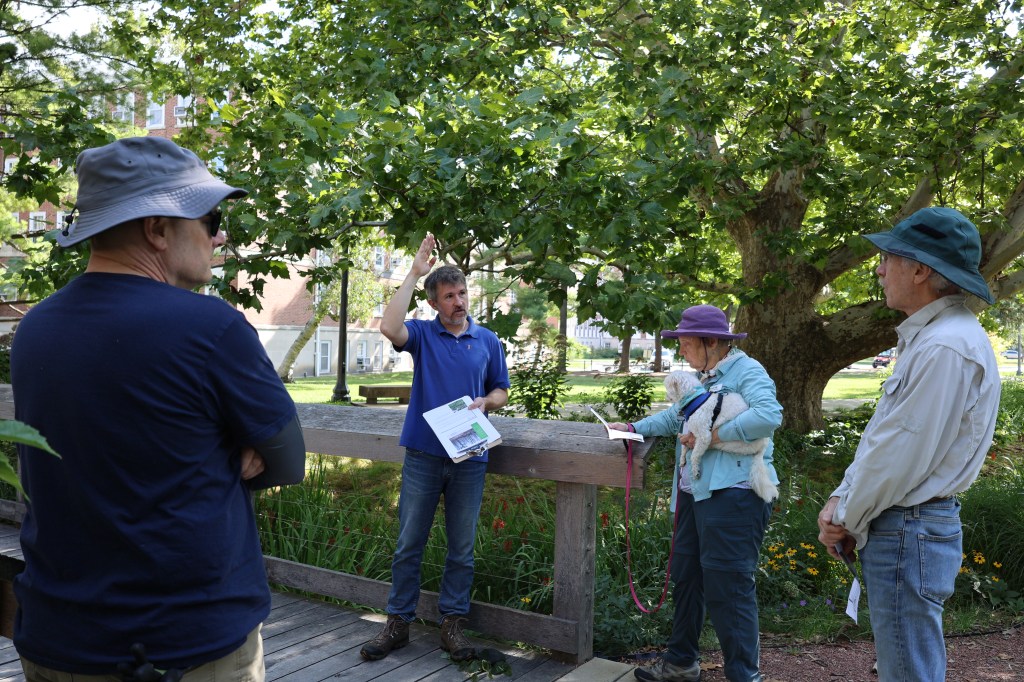
Spring brought a steady flow of visitors, both human and wildlife. Guided tours welcomed a wide range of audiences, including Master Gardeners, university classes, community groups, and campus organizations. Each tour offered a chance to talk about stormwater management, native plants, and how RORG functions as both infrastructure and habitat. Fresh spring blooms were appreciated by pollinators as well.
RORG Student Team Expands
The RORG Student Team continued to grow this year, bringing together students from multiple disciplines to support RORG’s communications, stormwater education, and stewardship. New spring team members included Abby Jacobs (Graphic Design), Clare Smith (Architecture), and Kshitija Wadgaonkar (Landscape Architecture).
Students contributed across outreach, programming, and stewardship efforts under the guidance of Eliana, Layne, and Maddy. Erin Schimenti led communications and created botanical artwork to support native plant literacy, Joe Hinsberger supported Rain Garden Rumble planning and stewardship, and Chantal Korde contributed blog writing and research for Illinois Extension stormwater projects.
We also celebrated Erin and Chantal’s graduation. Chantal earned a B.S. in Chemical Engineering with a minor in NRES and now works at LanzaJet. Erin earned degrees in Sustainable Design and Communications and continues creating botanical illustrations for RORG outreach.


The Rain Garden thrives
Spring in the rain garden is always refreshing, even as we were at the onset of a months-long drought. Facing the dry conditions, plant performance continued to reflect the resilience built into the garden’s design and maintenance approach. Displays of wild geranium, Jacob’s ladder, phlox, iris, and many other plant species brought lively color and beauty to our corner of campus.
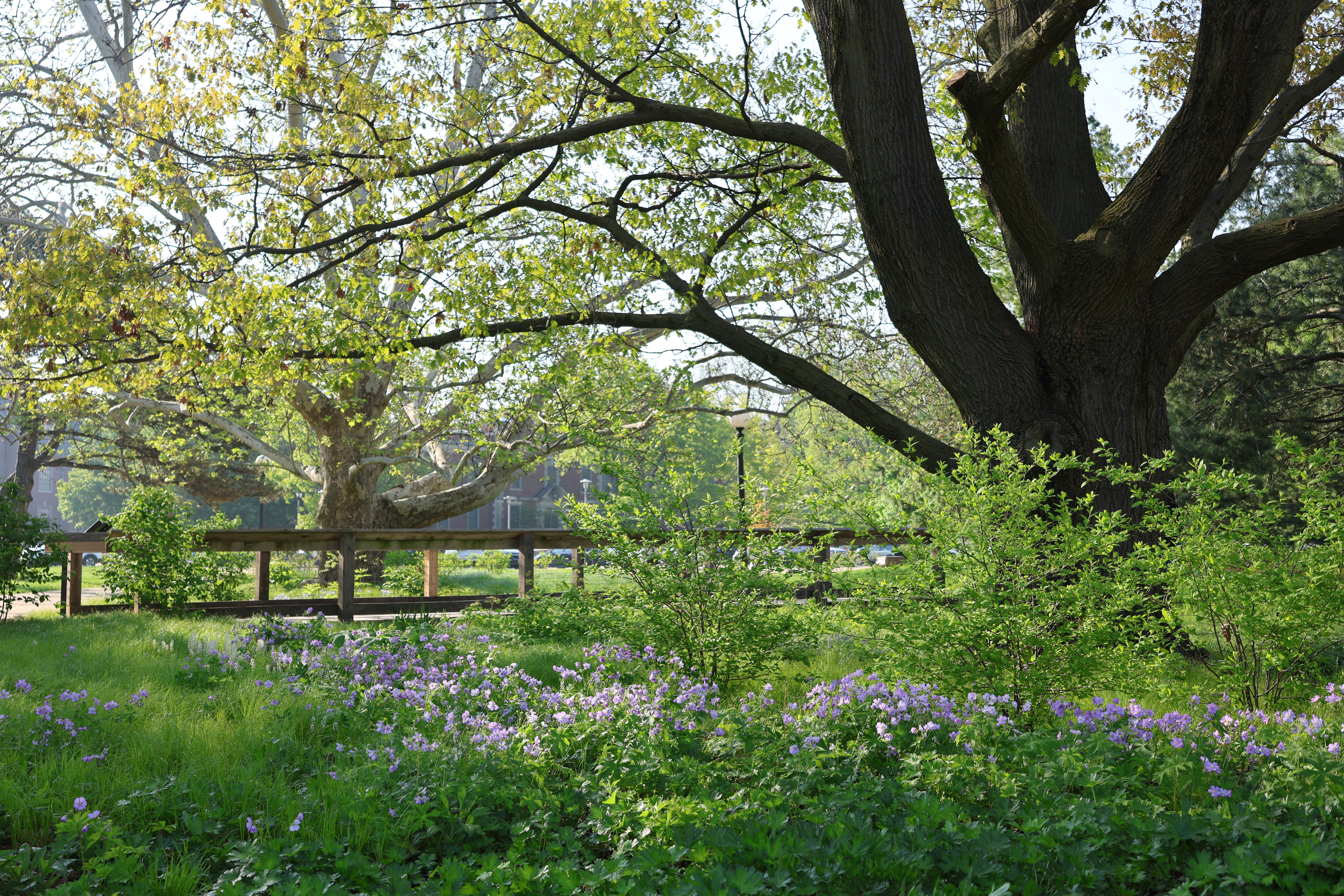
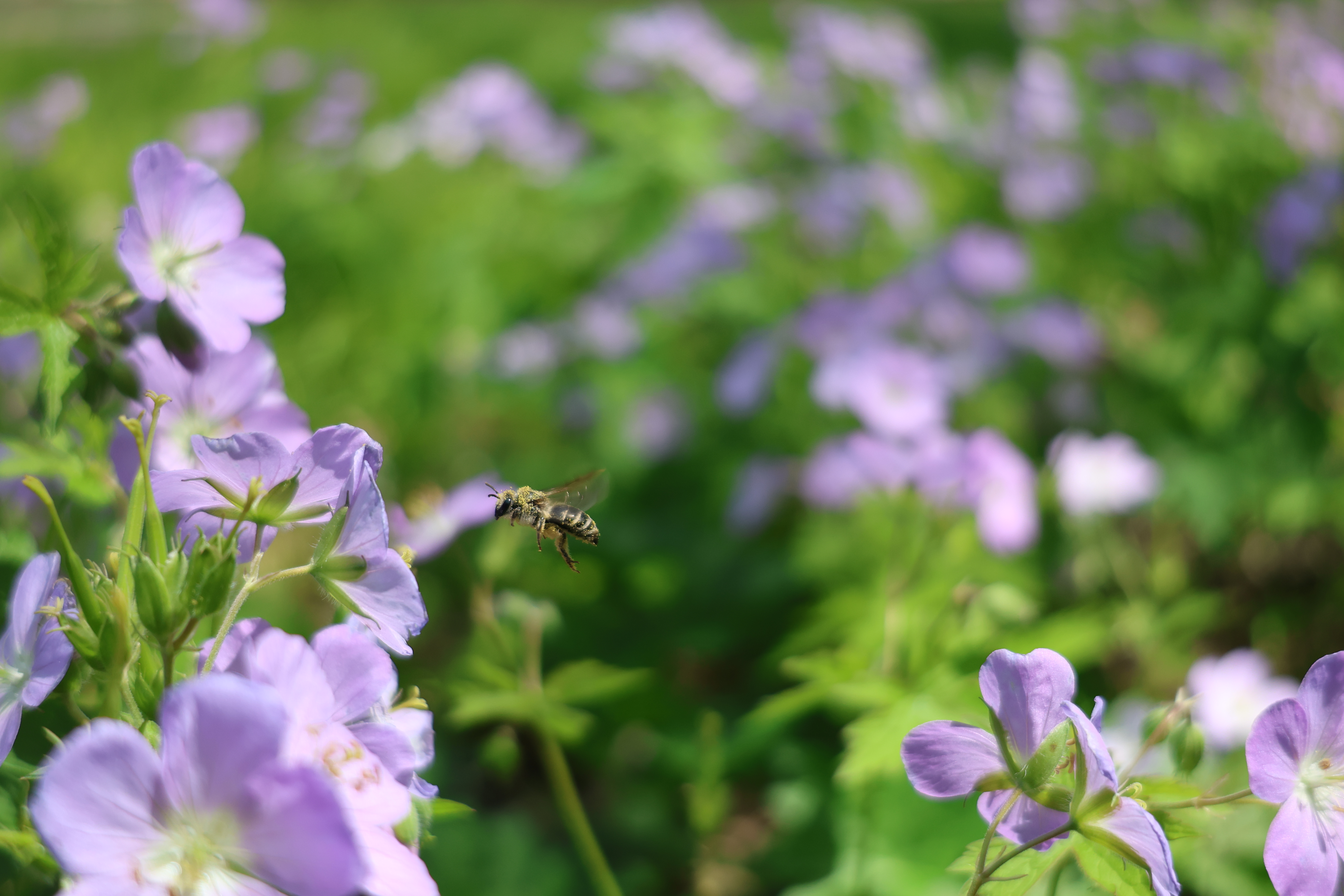

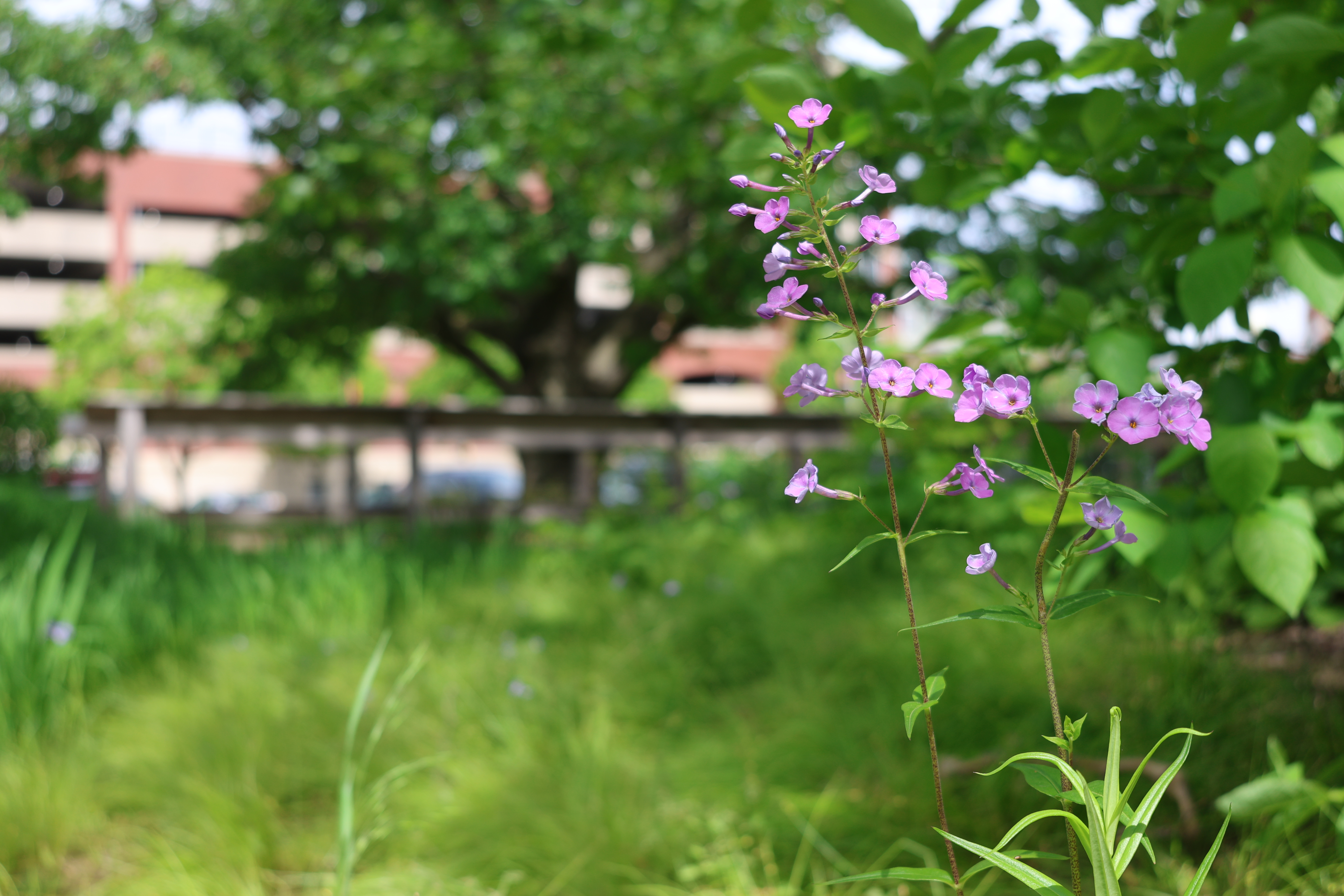
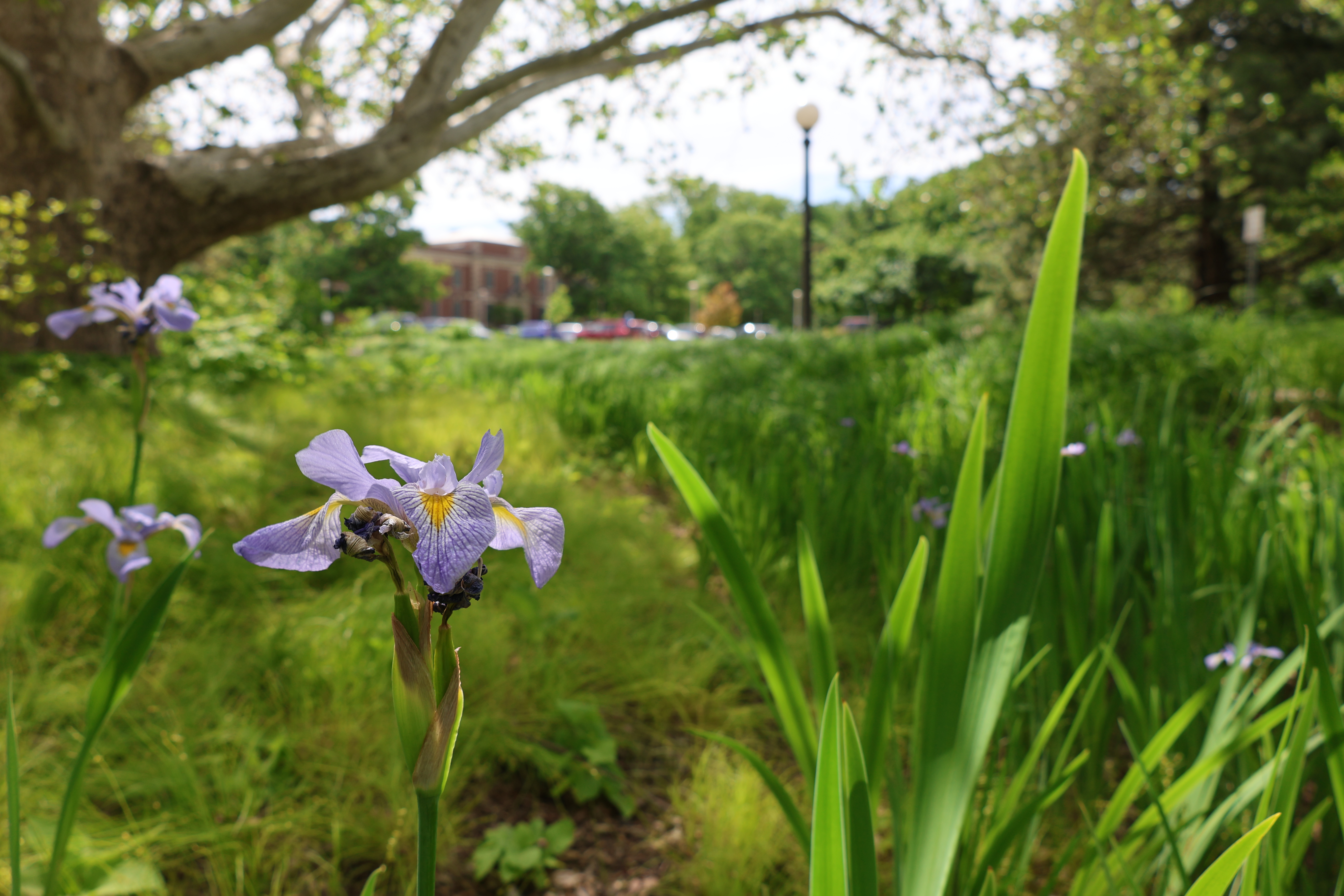
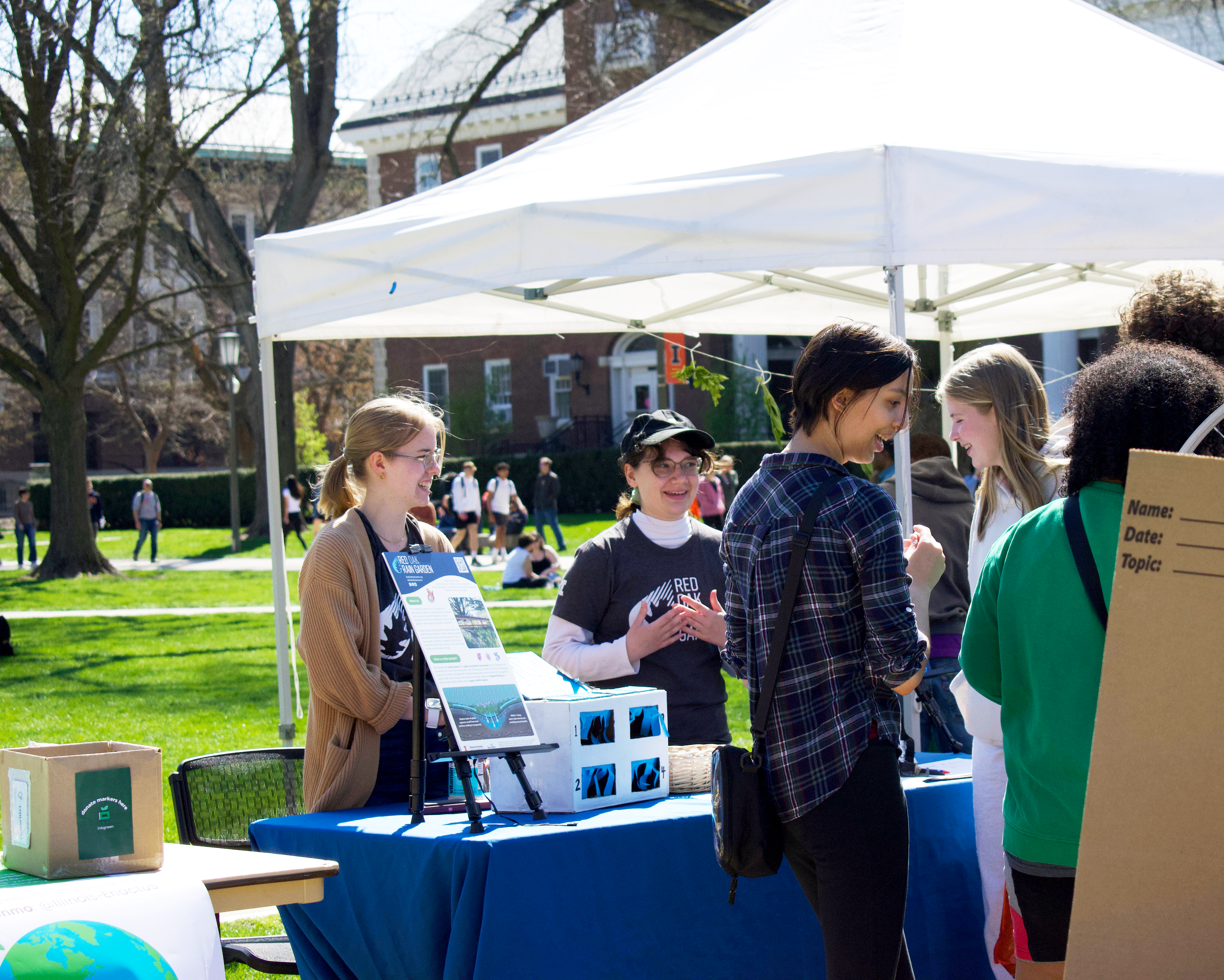
RORG came alive in spring! And so did our campus. The RORG students helped spread the word about the rain garden at various campus events by staffing booths. Photos by Maddy Craft and Clare Smith.
Summer
Rain Garden Service-Learning
Weekly volunteer days brought together community members, students, and campus partners to care for the garden through weeding, watering, monitoring, and observation. Volunteers also contributed to seed collection and plant care that supports long-term garden health. Maddy Craft led weekly hands-on trainings, teaching volunteers about native plant care, maintenance tasks, and beneficial insects that benefit from green infrastructure.

Stormwater Intern Addition
In June, we added a new intern to our RORG student team: Jenna Balaban. Starting as an Illinois-Indiana Sea Grant stormwater intern, she worked with Extension’s Nutrient Loss Reduction Strategy team to analyze MS4 stormwater reports. Jenna has remained on the team as a RORG student team member, helping with stormwater research and outreach for the RORG team.
Public Outreach Took Center Stage
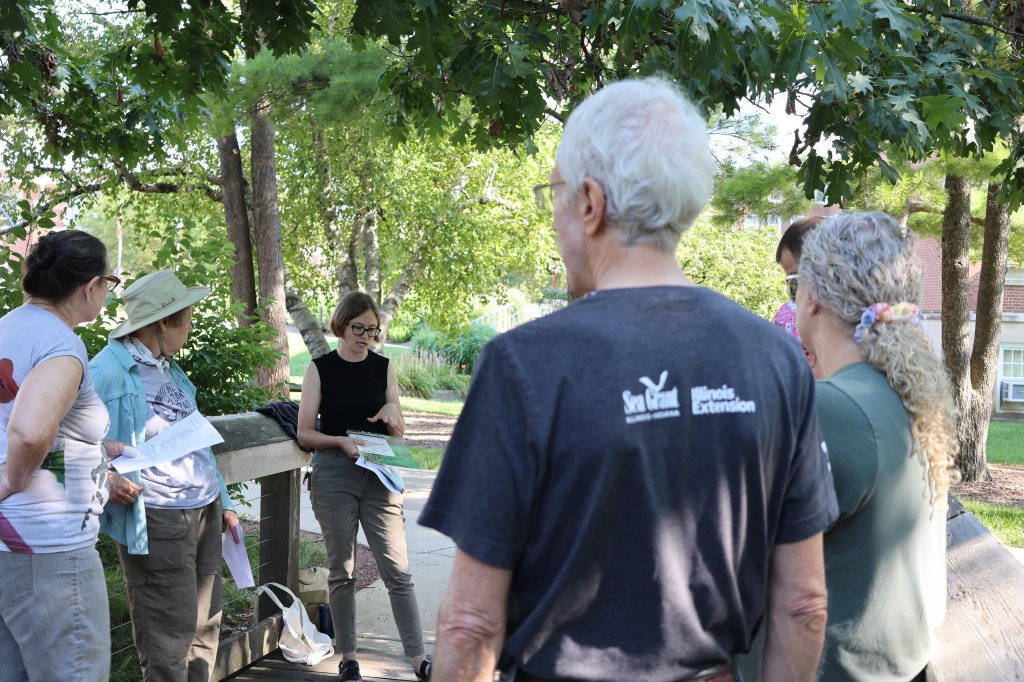
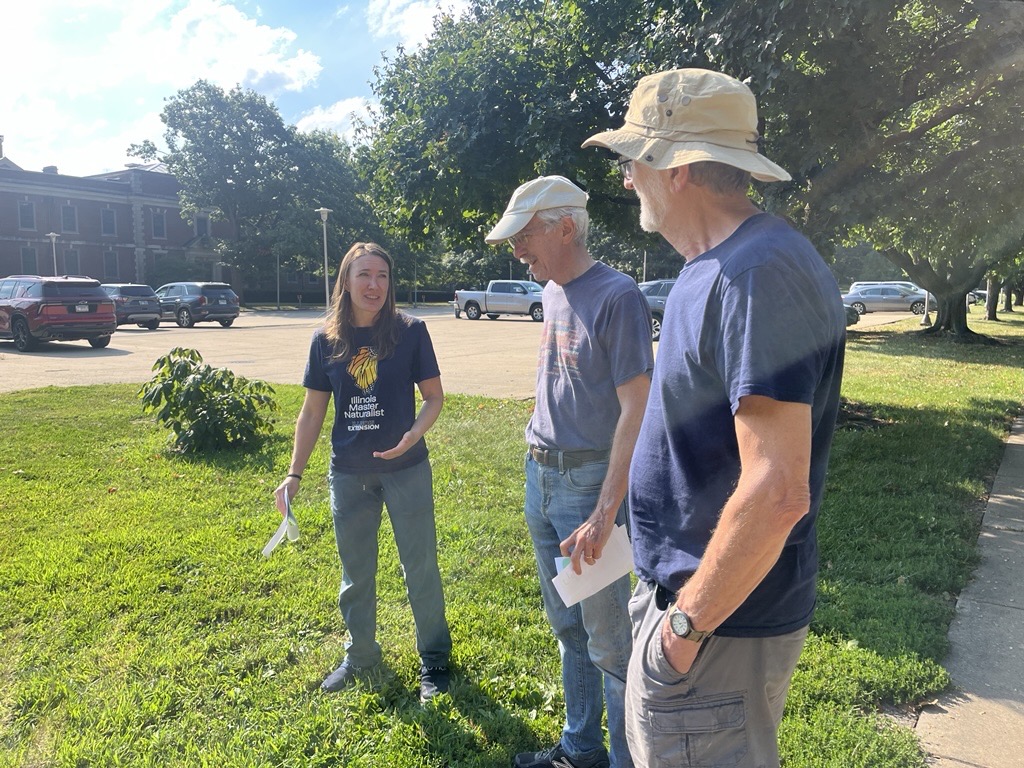
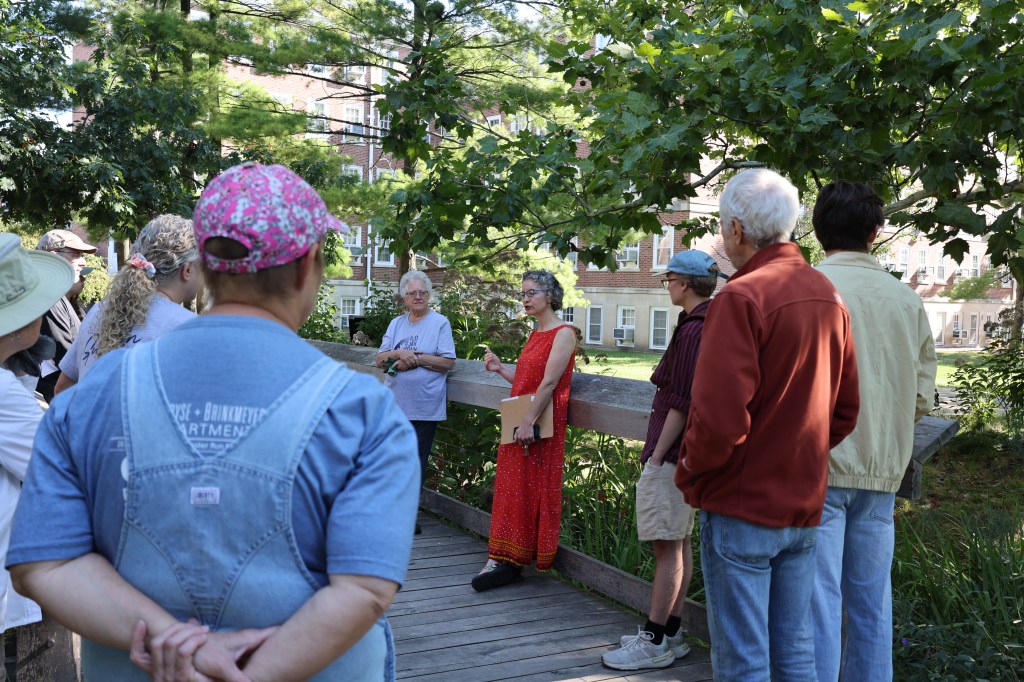
Summer camp-goers, new students, and community groups attended tours throughout the season, witnessing the beautiful blooms and wildlife that the rain garden brings. Tour guests left with the knowledge of rain garden benefits to water quality and community well-being, as well as an appreciation for the wildlife that calls them home.
In August, RORG hosted a Friday speaker series featuring Extension educators and local experts. Topics ranged from pollinator identification and native plant selection to plant survival strategies, the historical landscape of campus trees, and the ecological benefits of bats. Speakers included Sreelakshmi Suresh, Bridgette Moen, Karla Griesbaum, Ryan Pankau, and Joy O’Keefe, offering visitors a wide-ranging look at ecology, landscape history, and conservation.


Monitoring Equipment Installed
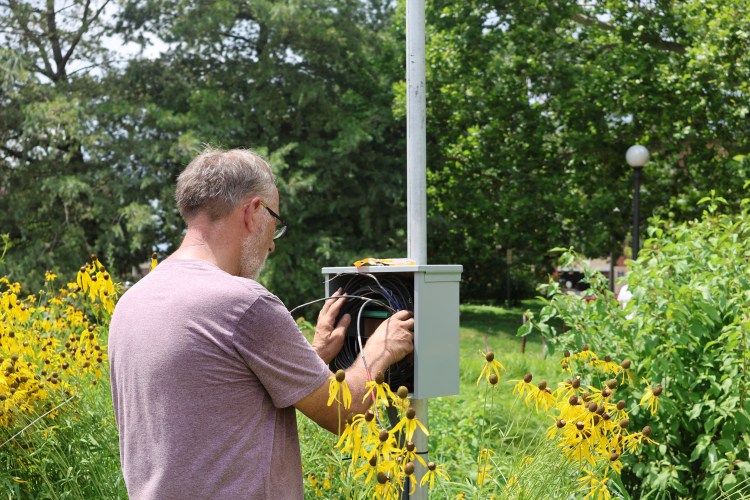
Monitoring equipment was installed this summer at RORG, in collaboration with Civil & Environmental Engineering (CEE) and the Illinois State Water Survey, supported by the Center for Advanced Climate Studies. The equipment, including soil probes and a weather station, came online later in the year, setting the stage for data-driven insights to guide maintenance and enhance RORG as a research-informed demonstration site.
RORG’s Plants Weathered the Drought
We feel like a broken record… for the fifth consecutive year, east-central Illinois faced drought conditions. This time, however, we faced drought conditions worse than the infamous 2012 drought! Most of the rain garden performed well, but we determined watering would be necessary in certain areas where the establishment of plants was still occurring.
Species like butterflyweed, royal catchfly, and pale purple coneflower all thrived in the hot, dry summer sun. In shaded areas of the rain garden, Joe Pye weed and other shade-loving plants attracted pollinators, bringing smiles to the faces of passersby.
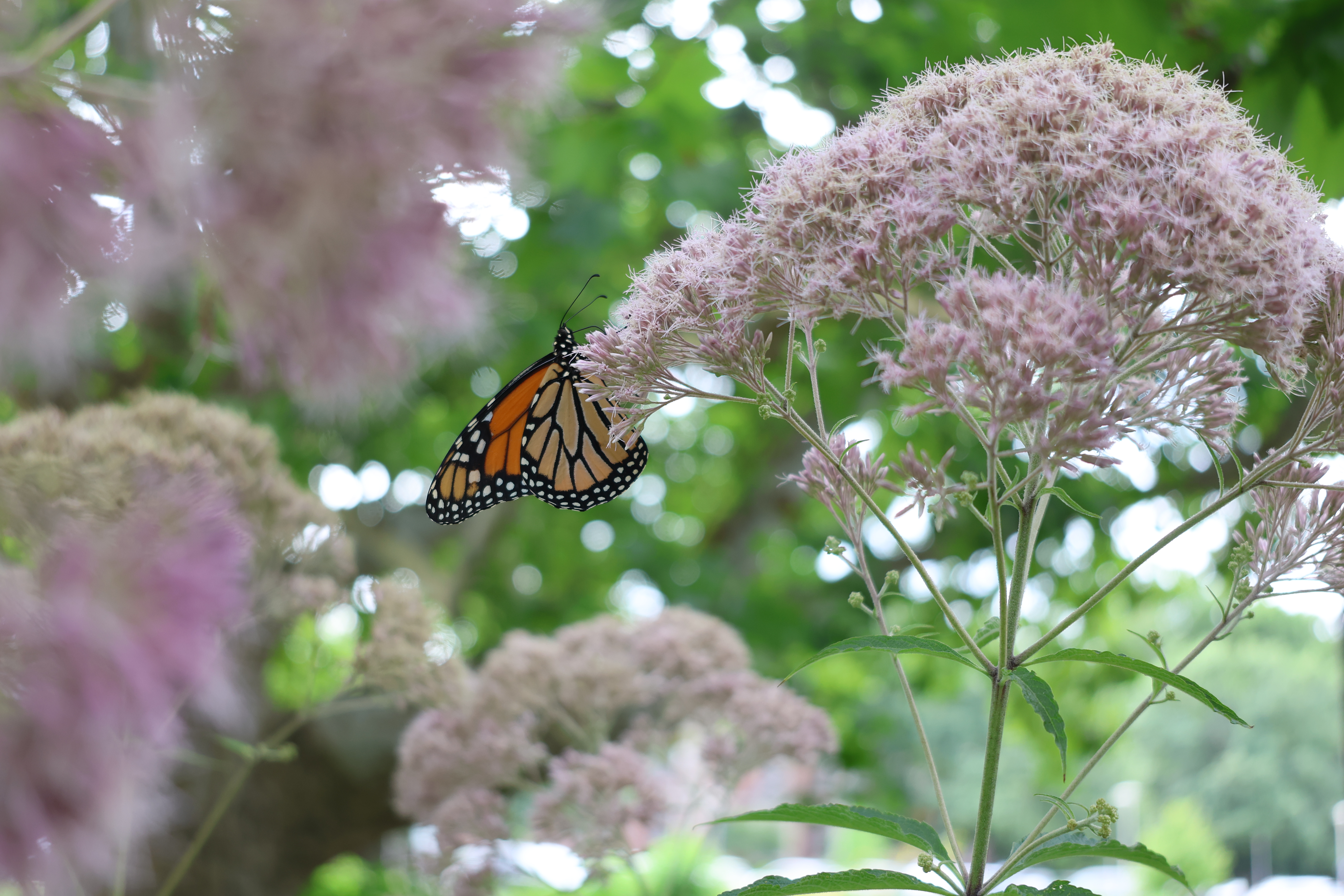
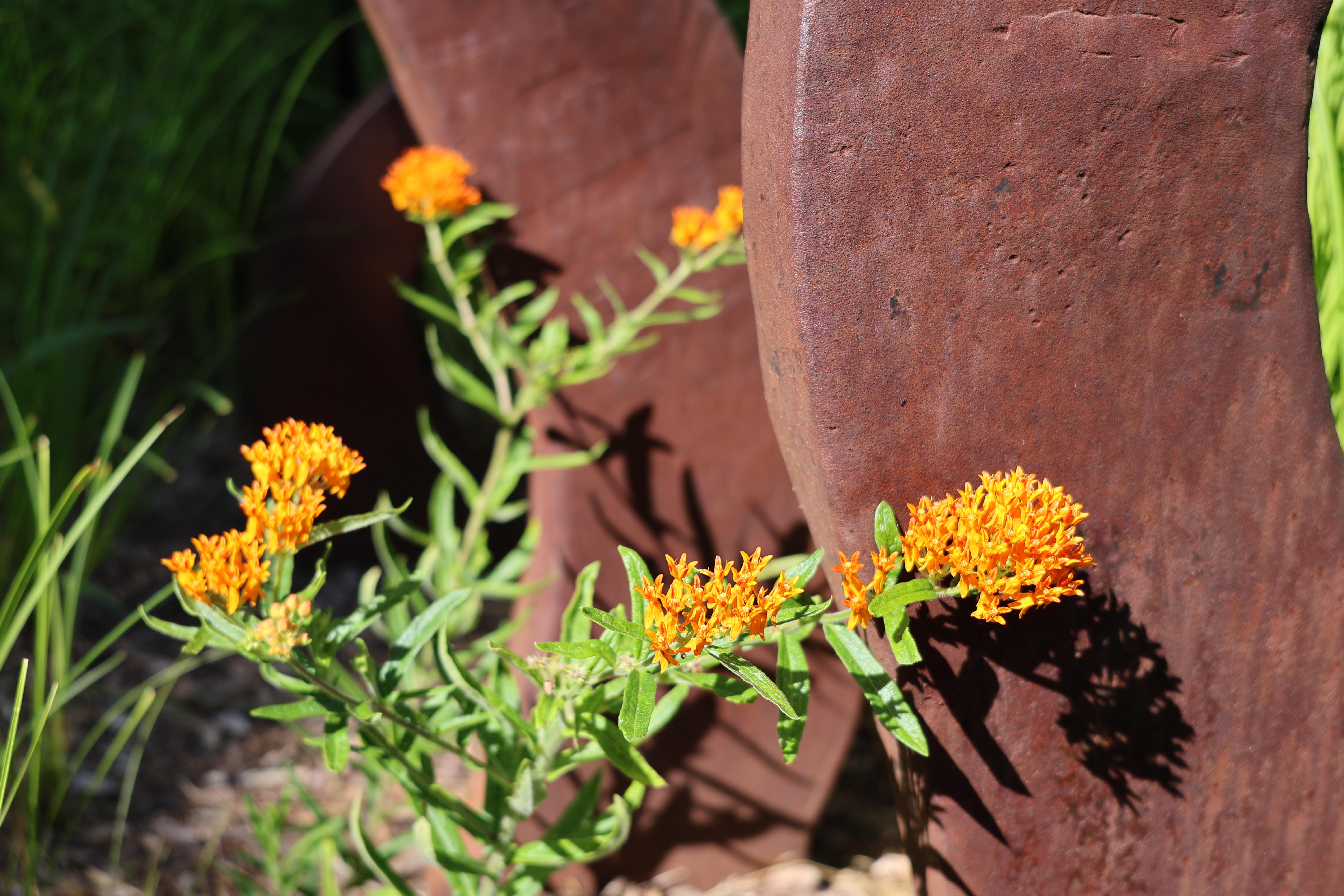
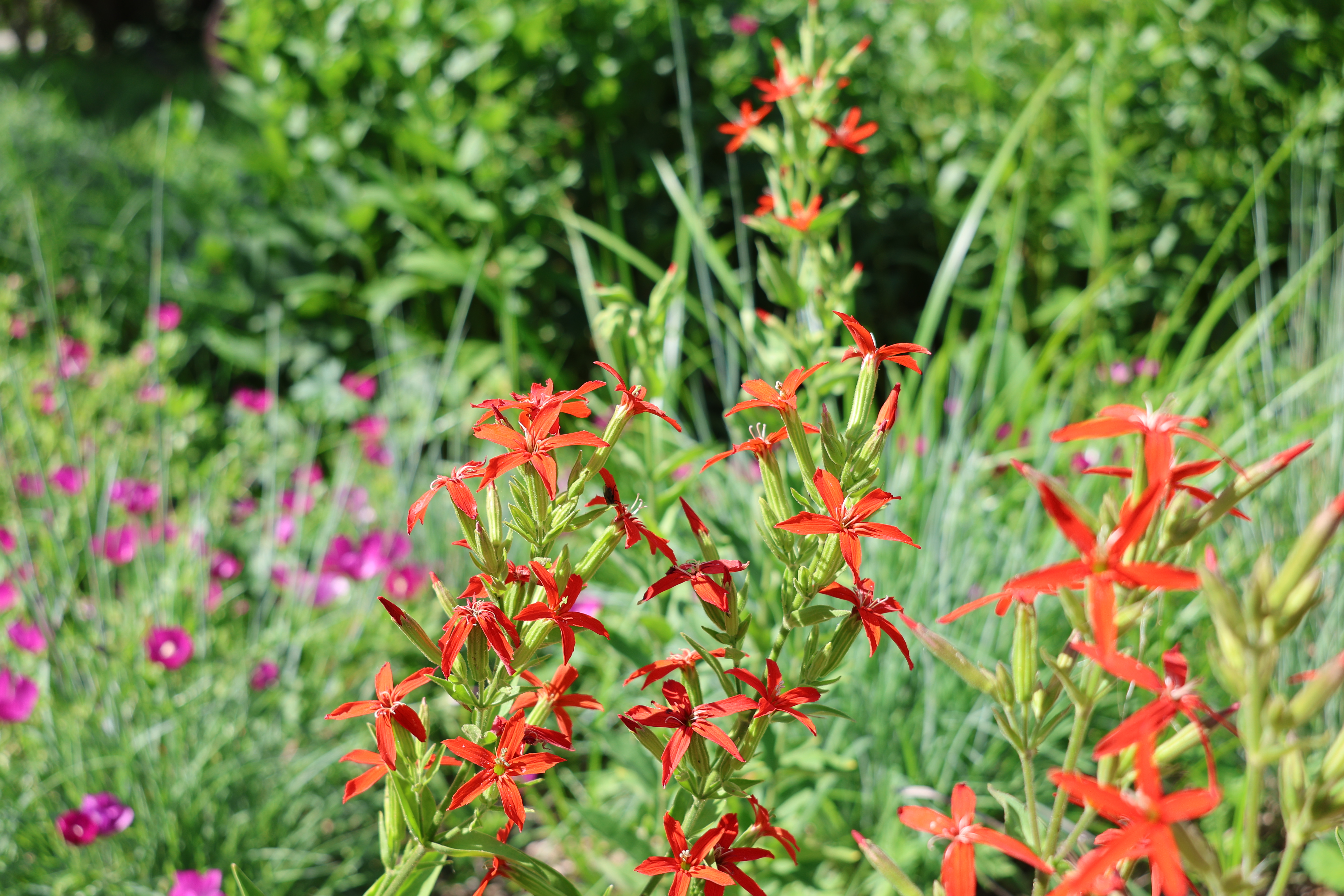
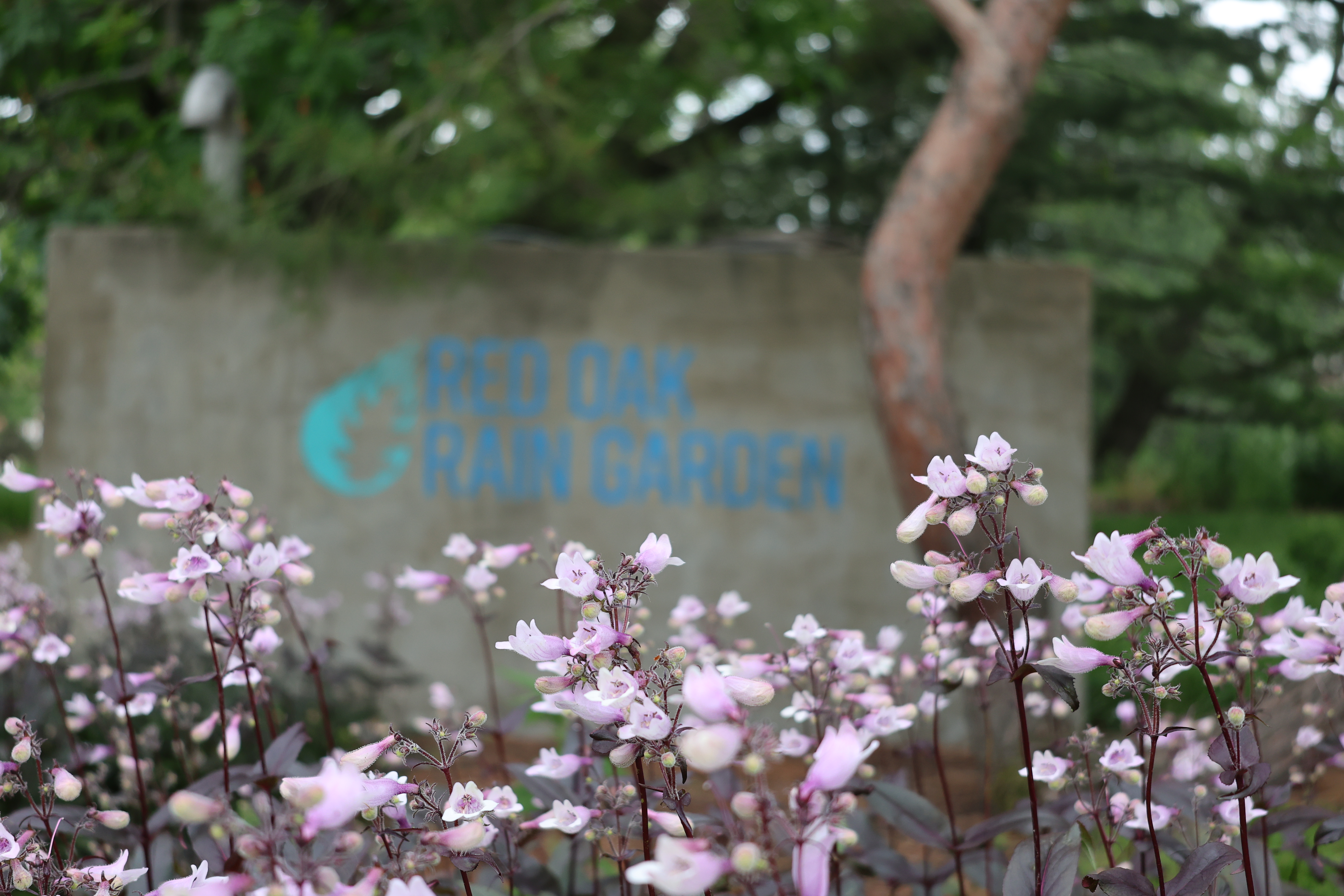
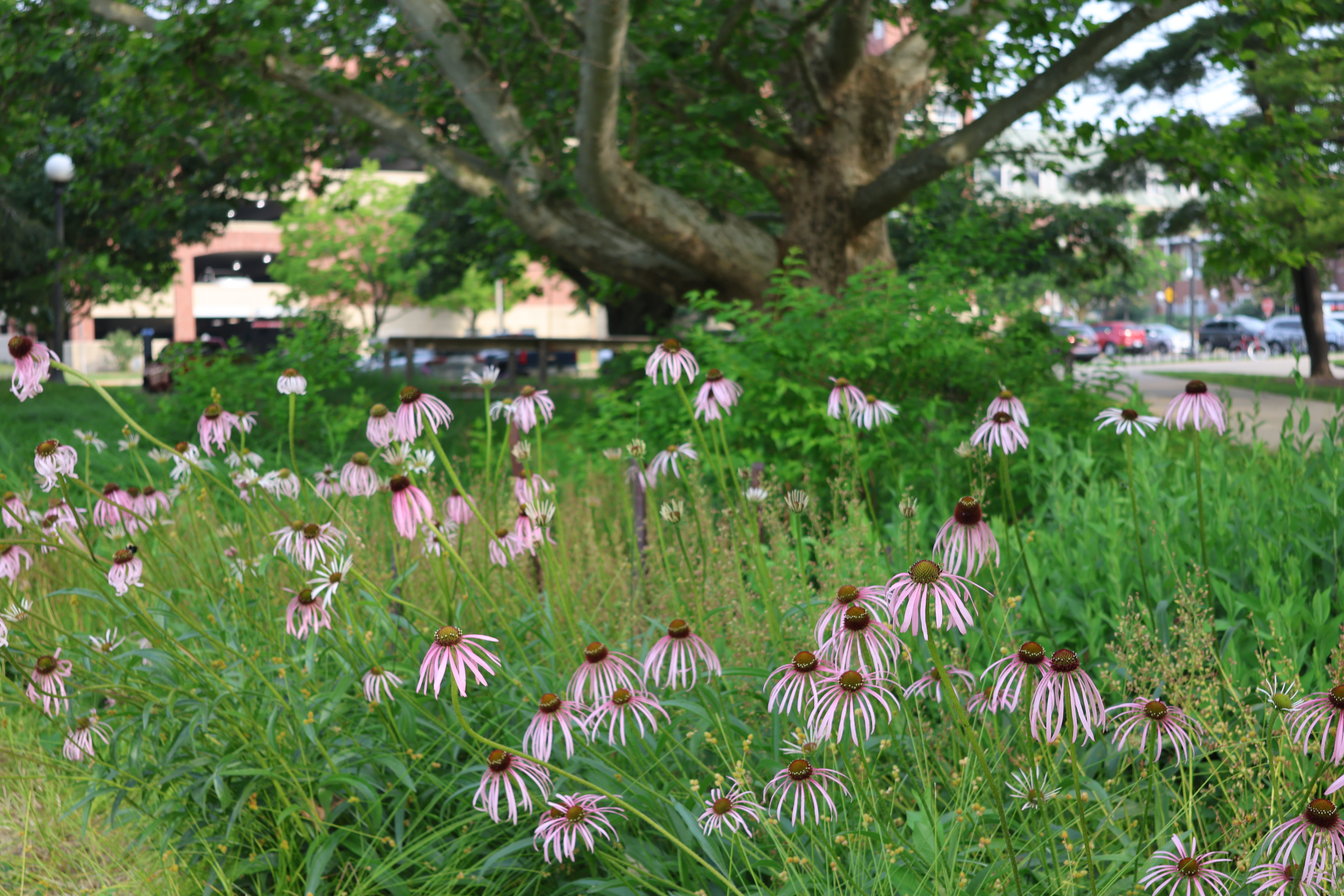
Summer brought hot days and hot (and some cool) colors. Kudos to the Red Oak Rain Guardians for stewarding the site and keeping it looking beautiful. Photos by Maddy Craft and Clare Smith.
Fall
New Plants Installed & Other Seasonal Tasks
In September, more than a dozen community and student volunteers installed nearly 300 new plants, including RORG newcomers like Virginia spring beauty and sharp-lobed hepatica. Aligned with our adaptive management strategy, the other newly-installed plants were designed to fill in areas of the rain garden where previous species struggled. The volunteers then carefully mulched and watered to help the plants establish before the first frost.


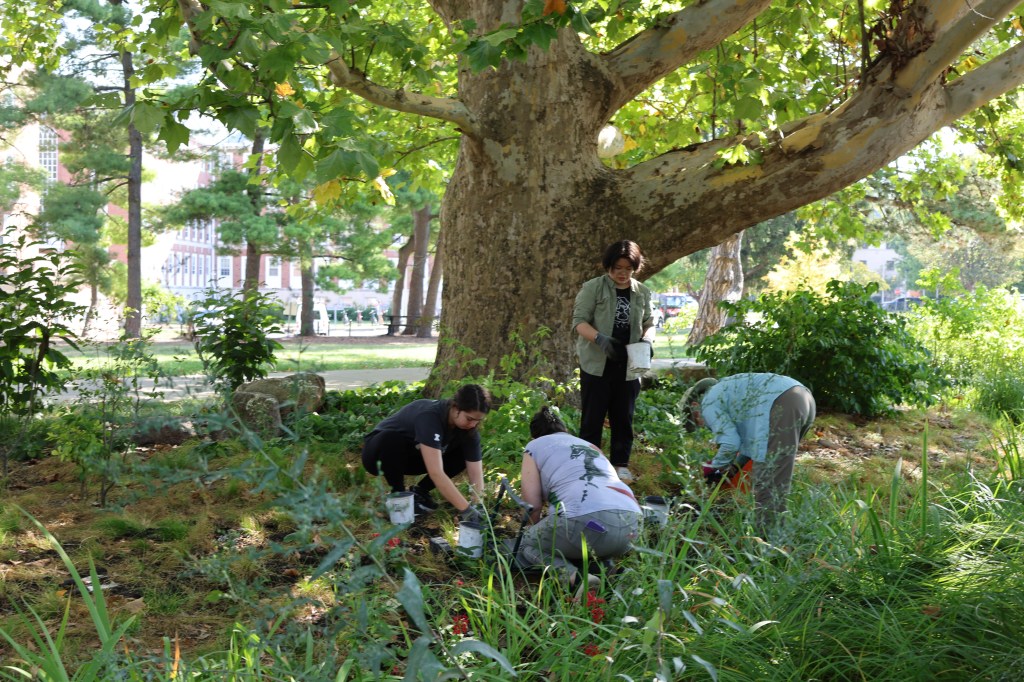
Volunteers also collected seed from purple poppy mallow, compass plant, and grey-headed coneflower; removed bark shed by the sycamore; pruned viburnums; and weeded throughout the garden. Thank you to everyone who contributed!
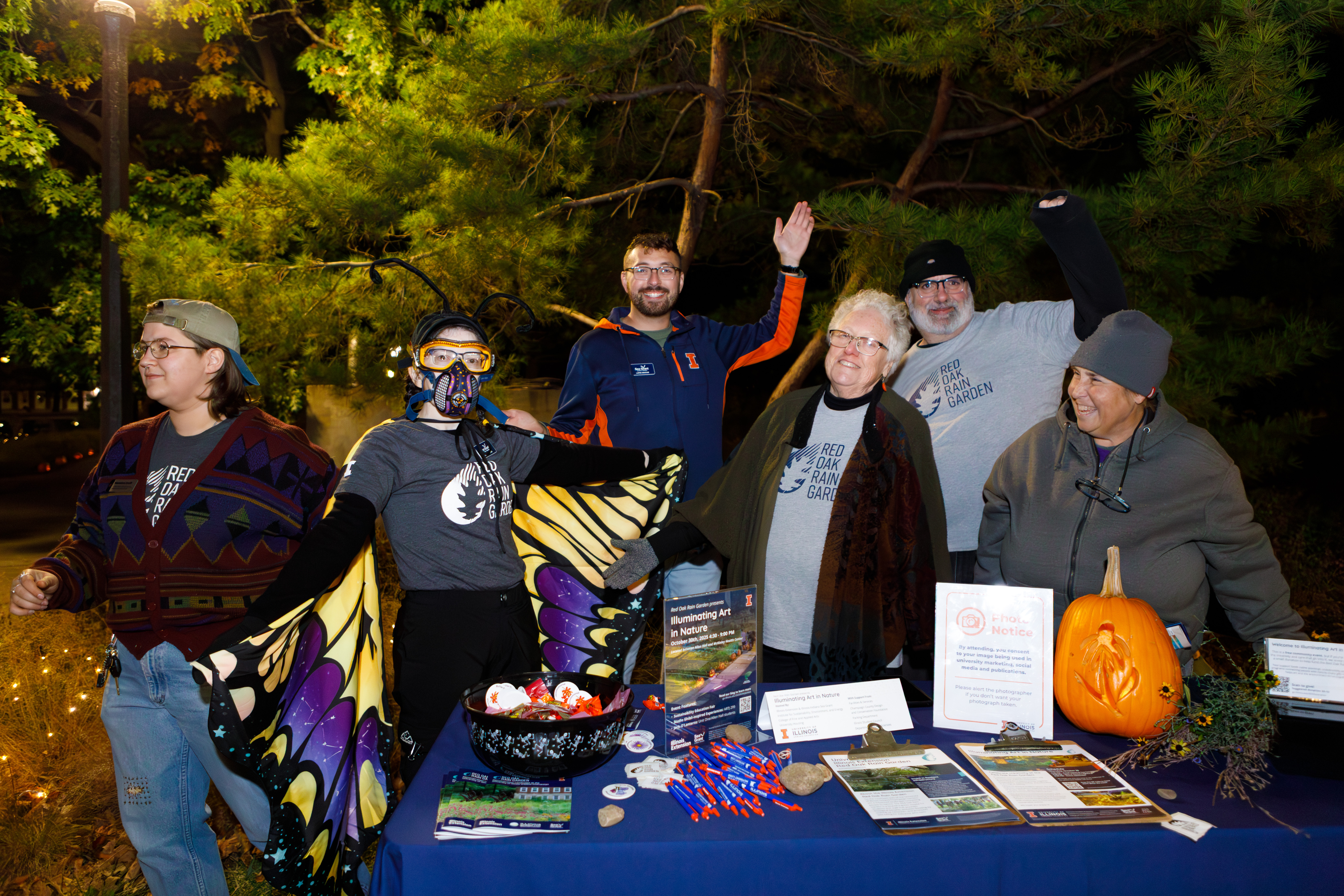
Illuminating Art in Nature was a Smashing Success!
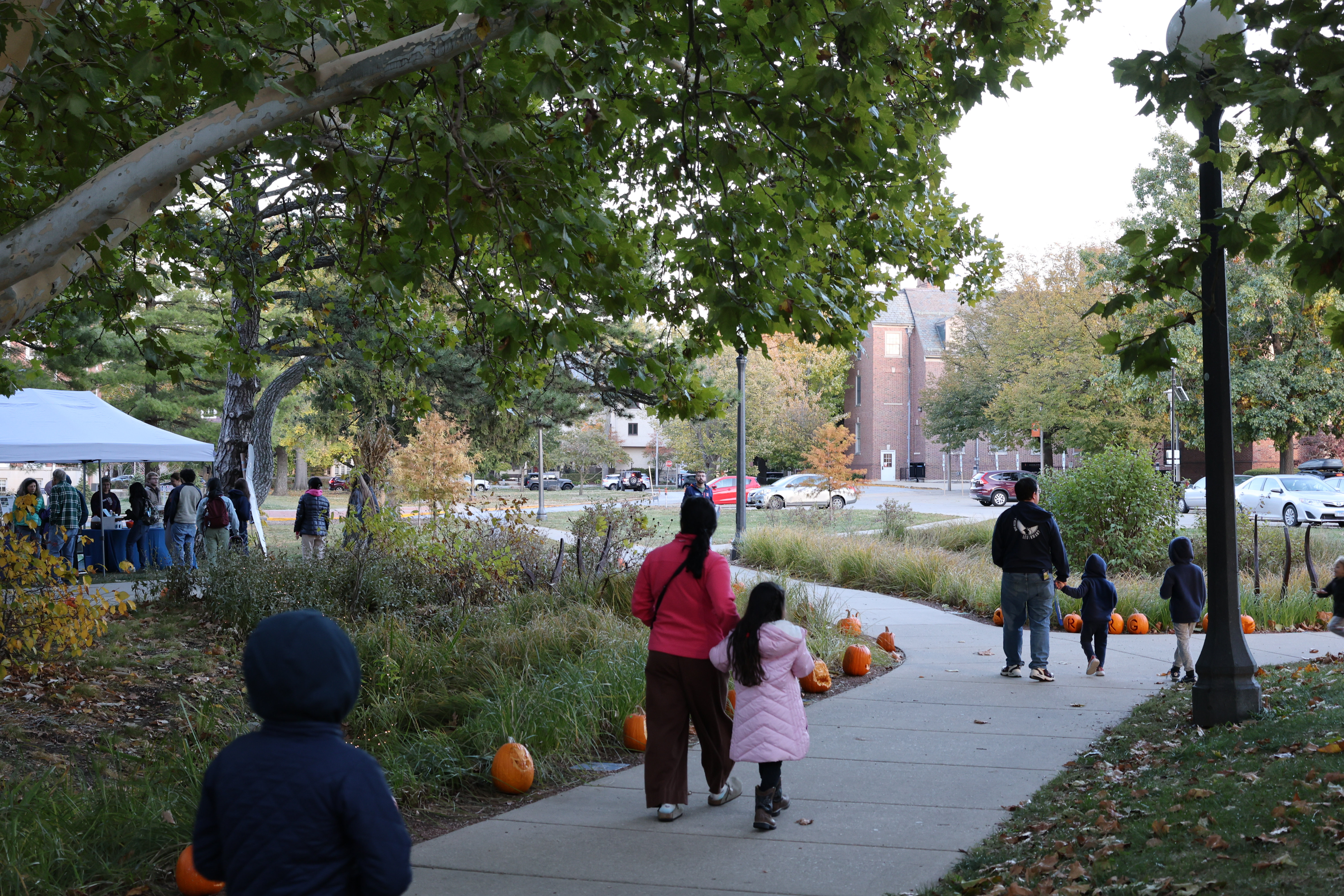
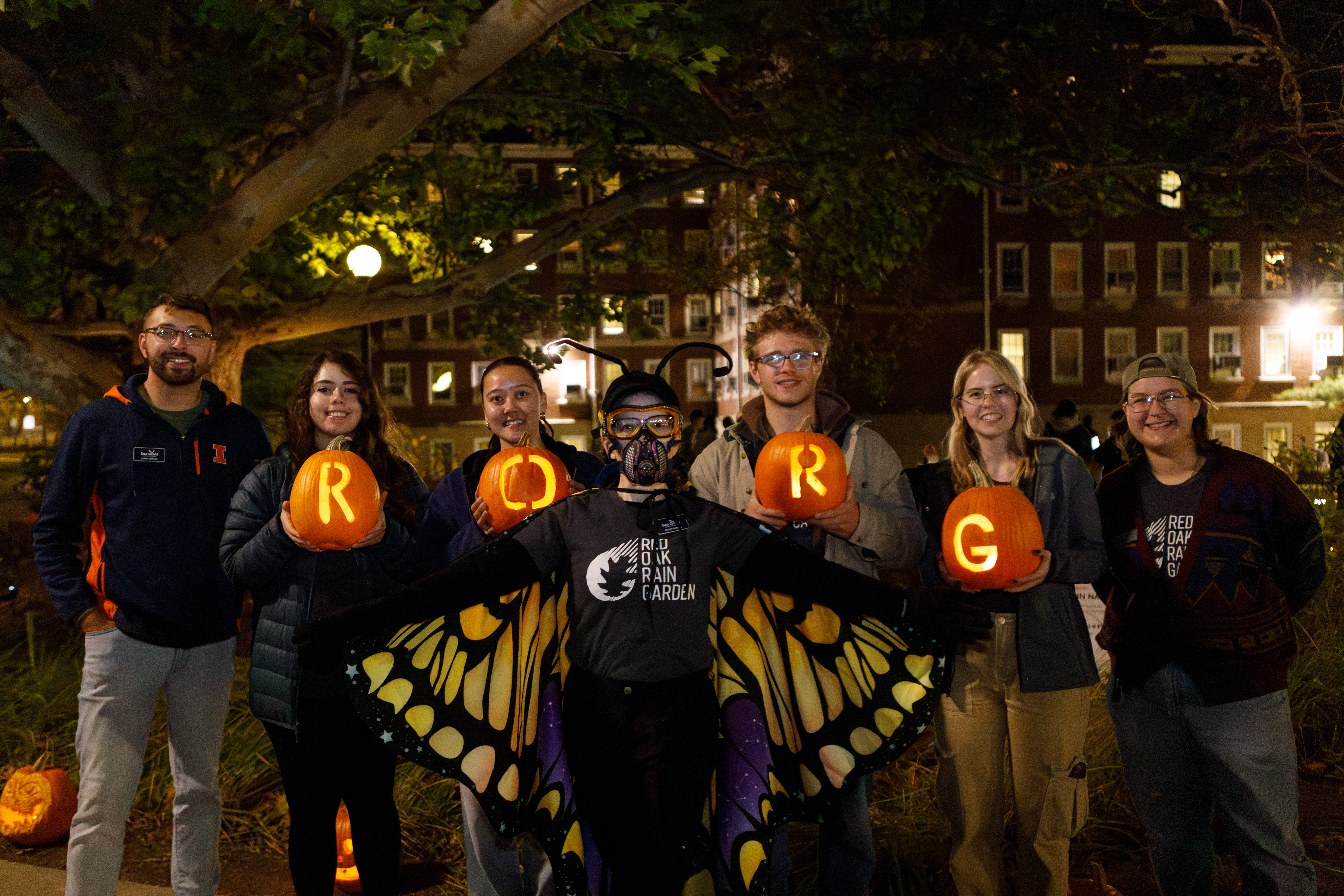
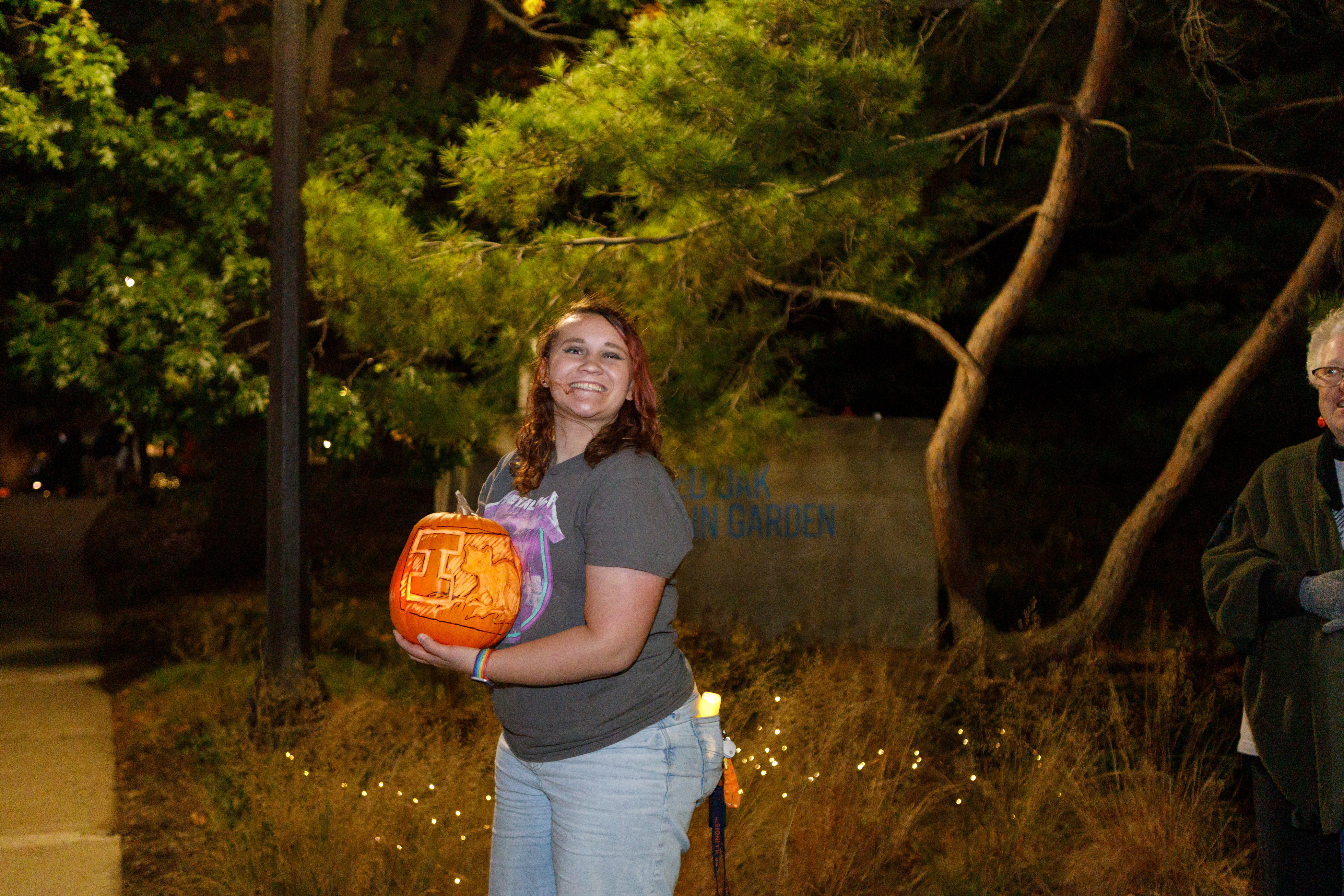
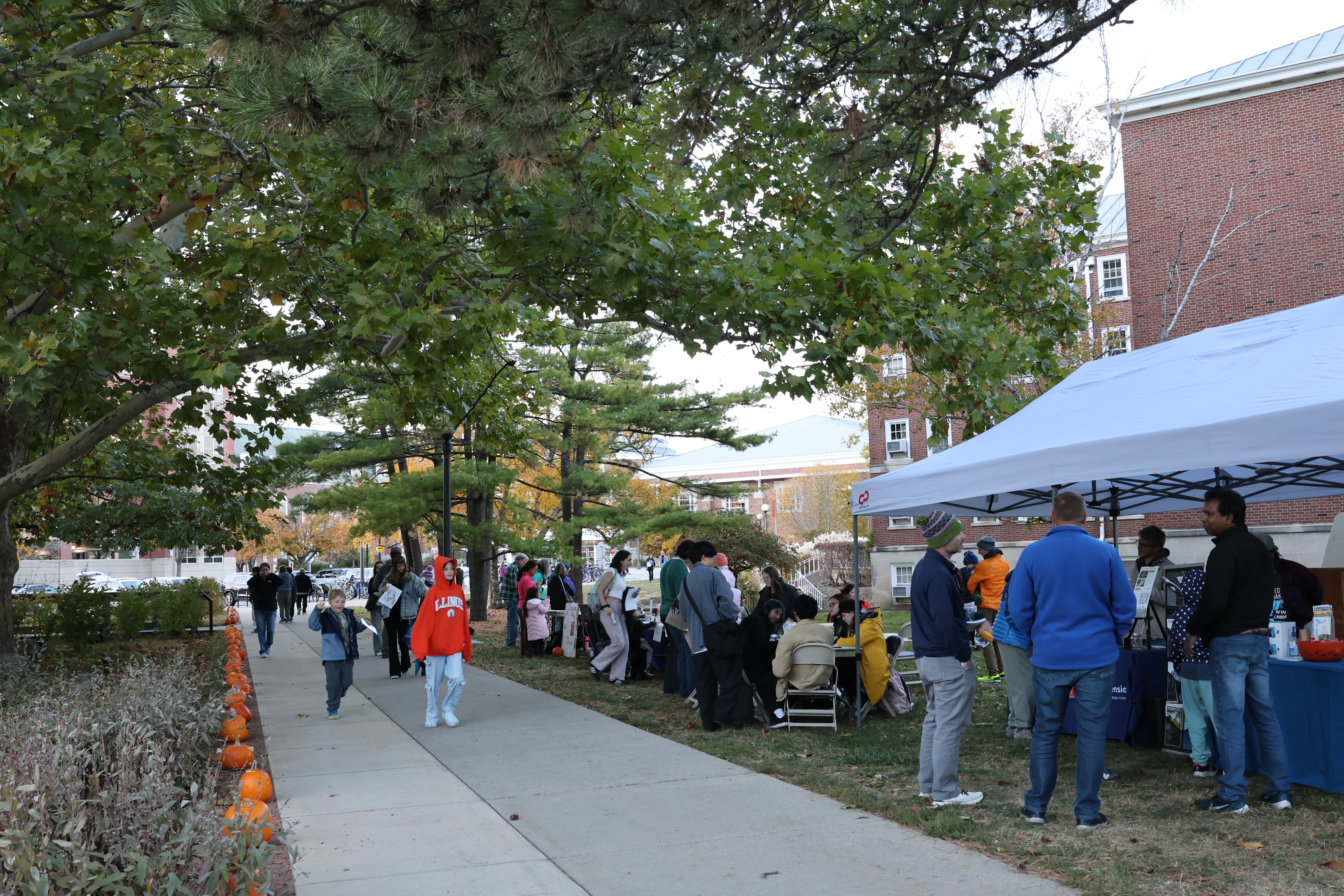
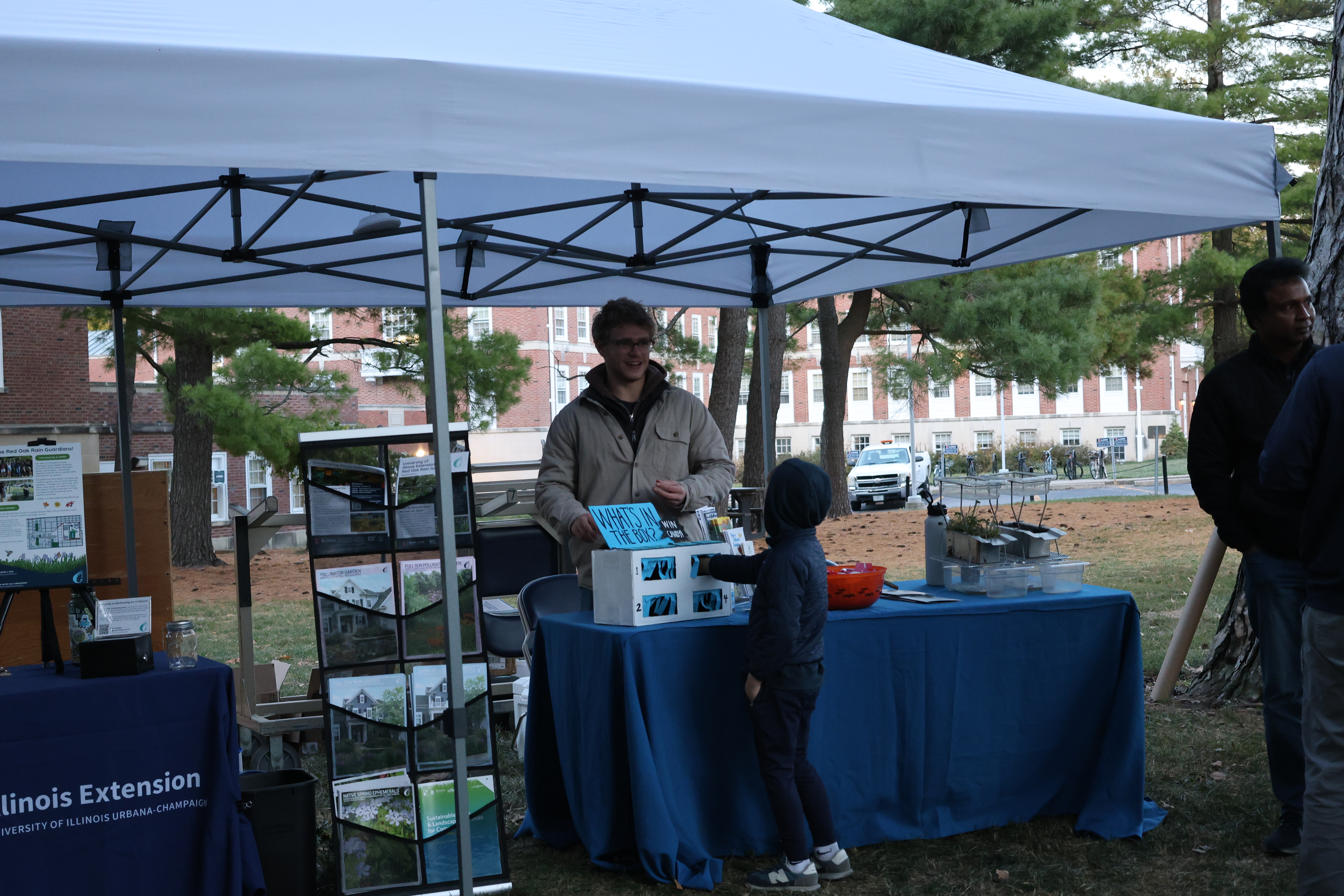
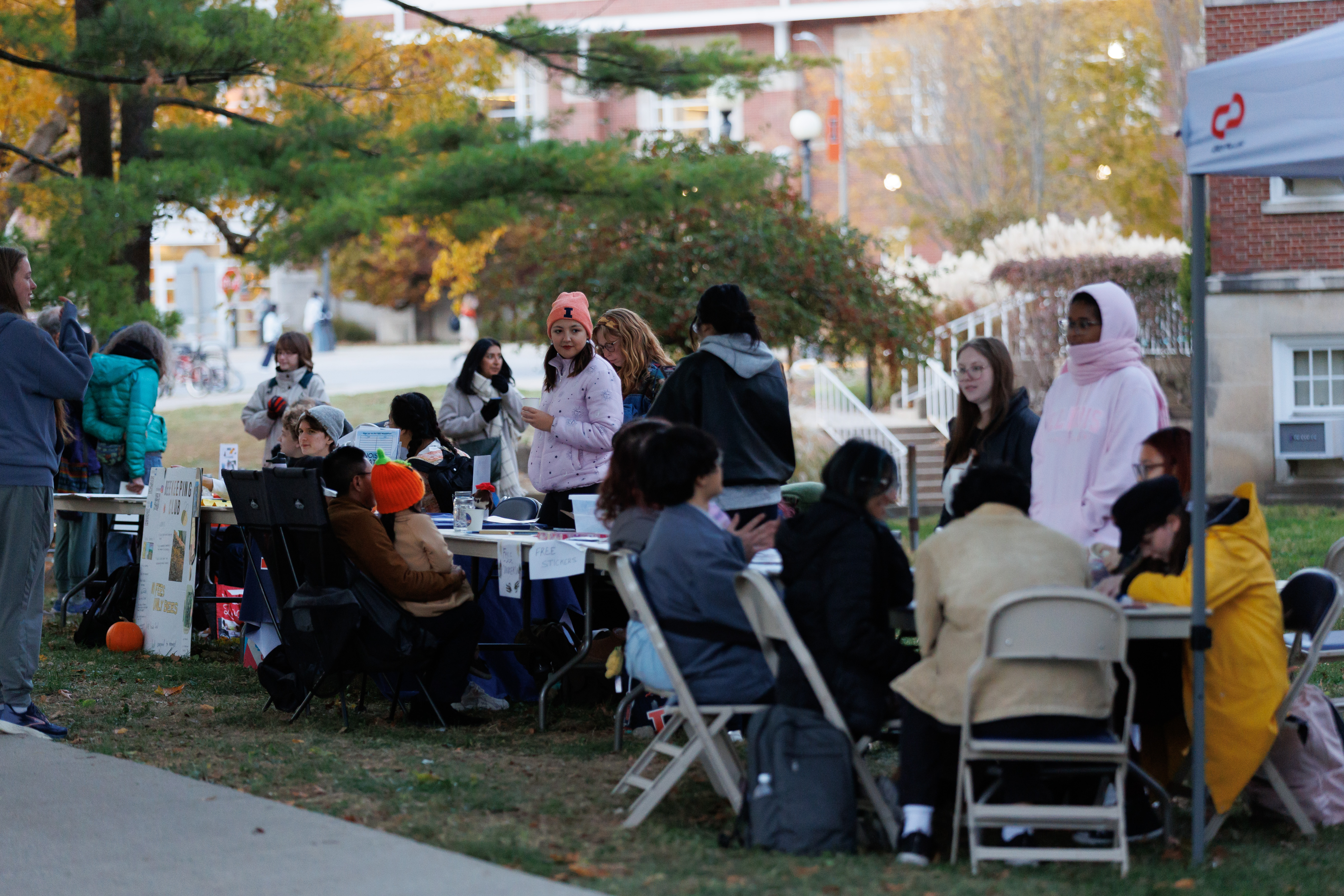
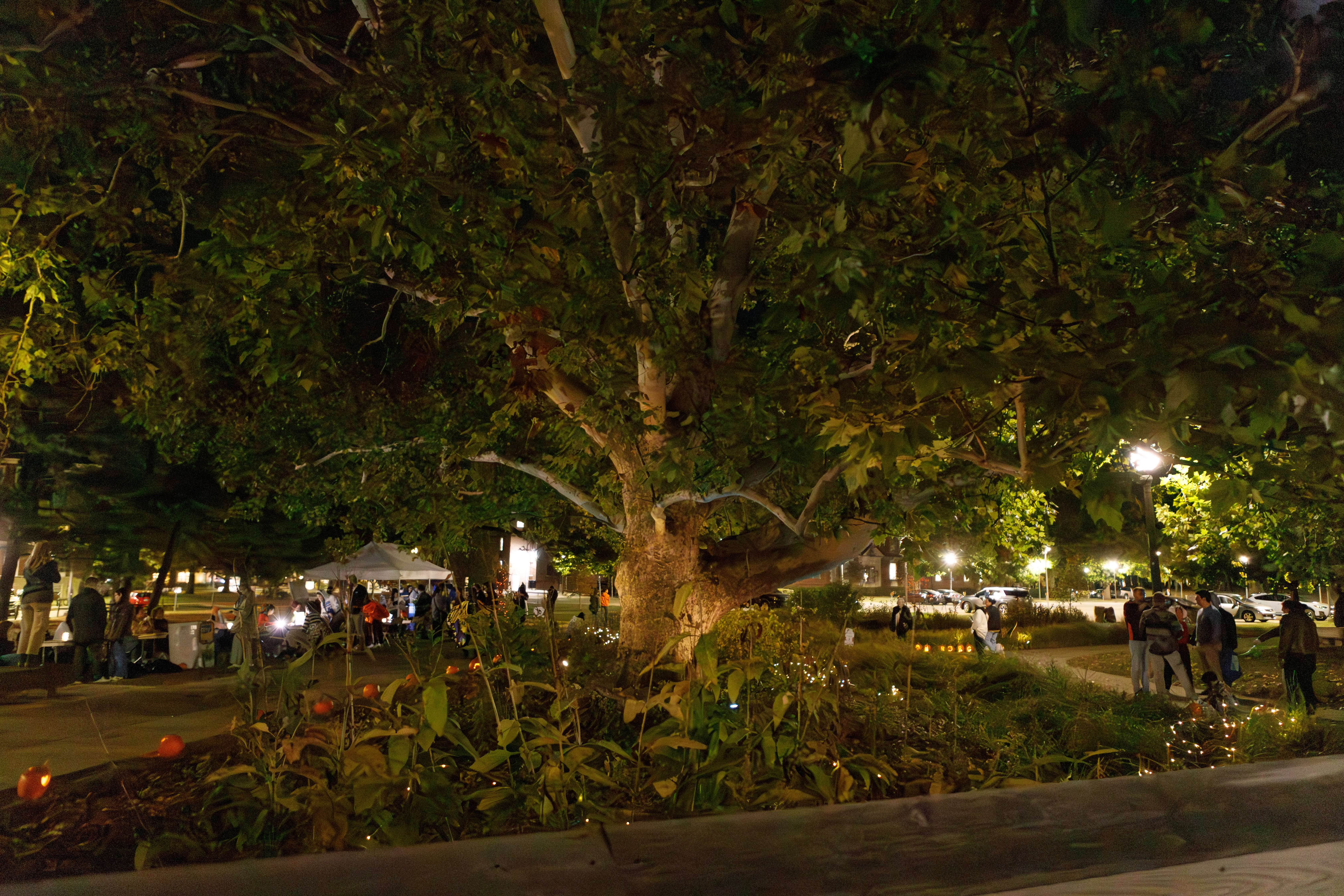
The second annual Illuminating Art in Nature event returned with expanded partnerships and programming, welcoming more than 700 visitors to the garden. Our Team, along with student artists, campus collaborators, and campus and community partners, transformed the rain garden through temporary installations, lighting, and interactive elements. The event highlighted the garden as both ecological infrastructure and cultural space.
So many people made this event a success! Special thanks to Stephanie Huerta and her Unit One/Allen Hall students for carving 75 pumpkins, Professor Lindsey Stirek’s ARTJ 299 students for Studio Ghibli-inspired installations, Miriam Keep (iSEE), Morgan White (F&S and CCDC), and the Red Oak Rain Guardians for welcoming guests.
Hosted by Illinois Extension, Illinois-Indiana Sea Grant, University Housing, the College of Fine and Applied Arts, and the Institute for Sustainability, Energy, and Environment (iSEE), in partnership with Facilities & Services, Champaign County Design and Conservation Foundation (CCDC), the Parking Department, Illinois Student Council, and the Department of Crop Sciences, the event combined creativity, sustainability, and community. Locally sourced pumpkins and corn stalks were composted through Grind2Energy and the Landscape Recycling Center, reflecting our Certified Green Event practices.
Students and partners engaged visitors at the environmental fair, judged pumpkins, and celebrated Unit One/Allen Hall resident Ruby Lester for the winning pumpkin. Together, this collaboration showed how creativity, sustainability, and community can thrive—thank you to all who helped make the garden glow!

Fall Foliage Meets Wintery Scenes
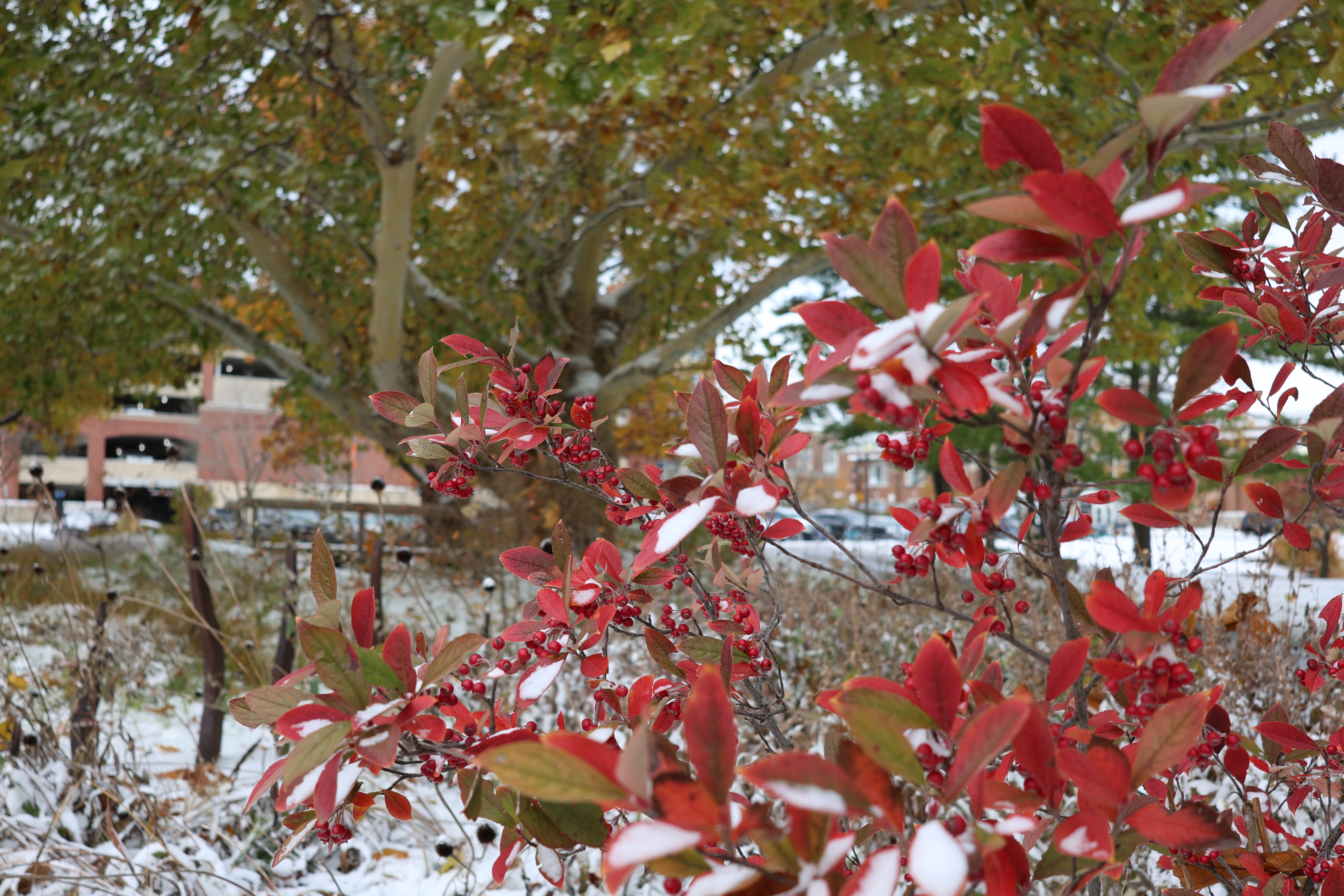
An early November snowfall collided with peak fall color in the rain garden. Along with a post-Thanksgiving snowfall that totaled over 8 inches, the early-season snow has kept volunteers from completing our annual fall cleanup, which focuses on removing some of the lignin-heavy red oak and sycamore leaves. These leaves take longer to decompose than others, and may cause smothering of our plants if left until spring.

Early Winter
Seasonal Cleanup on Hold
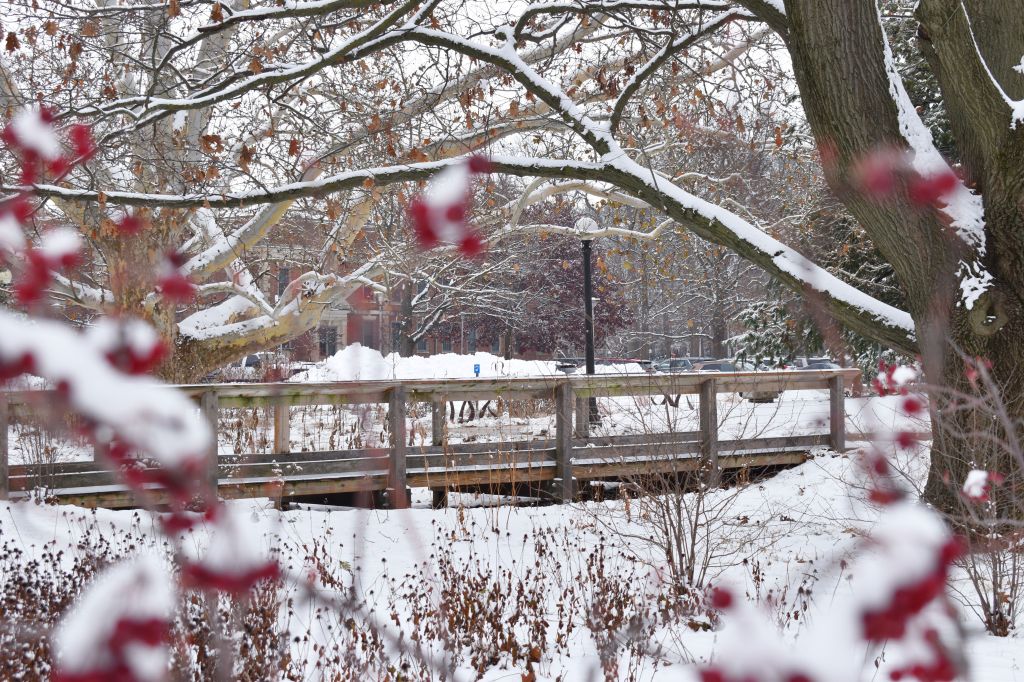
With 18.4 inches of snow so far this season, east-central Illinois is experiencing one of its fastest winter starts on record. To adapt, the Red Oak Rain Guardians will remove portions of leaves throughout the winter when conditions are dry and snow-free, rather than relying on the usual one or two days of major cleanup.
The cold and snowy weather has not stopped the RORG Team from their mission of providing outreach and education on rain gardens and water quality to communities statewide. We continue to work throughout the winter on projects that are informed by RORG that will help the region understand the benefits of green stormwater infrastructure. Read on for more info!
Reflecting back on 2025
Community Engagement
Looking back on the year, RORG’s impact extended well beyond the garden through education, outreach, and hands-on learning. In 2025, 11 hands-on volunteer trainings were led by Maddy Craft throughout the 44 volunteer workdays, equipping volunteers with practical skills to support garden stewardship and long-term care. RORG team members delivered five presentations, reaching 185 people through talks focused on stormwater, native plants, and green infrastructure.
Volunteer engagement remained strong, with six major volunteer events, in addition to weekly workdays, bringing 51 campus and community members into the garden for stewardship activities. Educational tours continued to be a cornerstone of RORG’s mission, with 17 tours reaching 211 participants, including students, educators, and community groups.
RORG’s digital and on-site outreach also grew throughout the year. The team published 21 blogs and newsletters, reaching 5,664 readers, and participated in nine educational tabling events, engaging 1,356 people in conversations about rain gardens, stormwater management, and native plants.
Monitoring
Precipitation
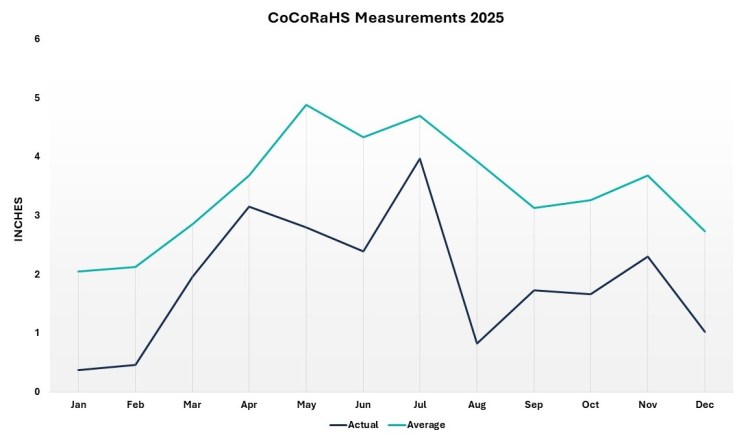
Every month in 2025 received less precipitation than average. Moderate drought conditions were first observed in Champaign County in July, with severe drought settling in during September. Since October, we have been in the extreme drought category. To date, this is the worst drought in the area in the last 131 years. The rainfall deficit is clearly reflected in our annual CoCoRaHS totals. RORG Rain Gauge Watchers Karen Folk and Katrina Kotowski recorded just 22.64 inches of liquid precipitation in 2025, compared to the east-central Illinois average of 41.38 inches—nearly 19 inches below normal for the year. Even so, our plants are strong, drought-tolerant, and, with careful monitoring, should continue to push through with minimal lasting damage. To learn more about local droughts, weather, and climate topics, read posts written by Illinois State Climatologist, Trend Ford, here.
iNaturalist
Biodiversity documentation also grew this year, with the number of species documented at RORG’s Biodiversity Project on iNaturalist increasing to nearly 260 species, 69% of which are arthropods, like bees, beetles, wasps, spiders, and more. These observations contribute to a growing record of the garden’s ecological value in our urban campus landscape.
Looking Forward to 2026
As we move into 2026, we’re excited to build on this momentum. With continued volunteer engagement, new monitoring data coming in, and plans for future programming, the Red Oak Rain Garden will keep evolving, just as living systems do.
RORG’s Impact across the Region
The Illinois-Indiana Rainscaping Program: Created to help communities and homeowners in designing, installing, and maintaining a rain garden through a 15-hour training in a flipped-classroom format. Currently, the program is undergoing a comprehensive update and is expected to relaunch in 2026. Using the information we have learned from RORG, others across the Midwest can be more confident in the success of their own rain garden.
Green Stormwater Infrastructure (GSI) Maintenance Course: Set to launch in 2027, and aimed towards municipalities, professionals, and maintenance crews, this online curriculum will inform participants of the considerations they must take in all steps of having an urban GSI project, such as bioretention and permeable pavement sites. In the curriculum, bioretention site information, like rain gardens and bioswales, is informed by the success of RORG and other projects around Illinois. This course is the stepping stone needed by many smaller communities to make GSI, as critical municipal infrastructure, become a reality.
Lumpkin Family Foundation–funded community education and native plant initiative: This initiative supports the Watershed Stewards program and provides native plant “Soft Landings” kits to residents in Mattoon, who have been affected by nutrient-fueled harmful algal blooms in their drinking water supply. The native plant kits are inspired by RORG plants and the lessons we have learned from our species and how they interact and grow together.
Thank you to everyone for your continued support on this journey– with your time, energy, and monetary donations. Together, we are able to help communities around the region in creating healthier green spaces, improving water quality, and supporting wildlife habitat. You have been instrumental in the success of RORG and, in turn, instrumental to these larger projects. Without you, all of this would not be possible. We hope you continue to support us in the future!
Gifts
Because of your generosity, we see continual growth in the Red Oak Rain Garden!
We had a successful GivingTuesday in early December, and we’re excited to share that we are more than halfway towards meeting our Maintenance Endowment fund goal of $75,000! Our Maintenance Endowment is a dedicated fund to support the ongoing care of this crucial ecological landscape. RORG is fortunate to have incredible volunteers as well as a strong partnership with the university’s Facilities & Services Grounds department. Some tasks extend beyond their regular scope and require additional resources, which this fund can provide.
Help us close out the year on a high note with your support by clicking the button below and selecting “Red Oak Rain Garden” from the drop-down menu. Contact Eliana Brown at brown12@illinois.edu for more information about giving.
Your tax-deductible donation helps ensure the future of the Red Oak Rain Garden. Together, we can preserve this lovely space and continue its positive impact on our community. Thank you for your consideration!
 Red Oak Rain Garden