
The Inspiration
When I tell people I recently graduated from the Sustainable Design program at Illinois, their first reaction is often curiosity. I’m frequently asked questions like, “What is Sustainable Design?” or, “How is it different from other design majors?” To me, Sustainable Design is set apart by its focus on solving real-world problems and designing not just for today, but for a resilient future.
During my time as a student working with the Red Oak Rain Garden (RORG), I learned how green stormwater infrastructure (GSI) can transform spaces into thriving native ecosystems that also serve their communities. So when it came time to choose a topic for my senior capstone project, designing a rain garden felt like the natural choice. That’s how the first seeds of Deucalion’s Garden, a hypothetical rain garden and educational space south of Foellinger Auditorium, were sown.
My work on this project started last fall in my capstone seminar course, where I laid the groundwork through research and planning, which would become instrumental to my work in the spring. The first step was identifying the site location. I chose the area between the Main Library and Foellinger Auditorium, which currently has a few scattered plants and trees but is mostly turf grass. An active part of campus right by the main quad, students and faculty regularly pass through. However, I noticed after rainfalls that the sidewalks frequently flood, causing many people to avoid the area.
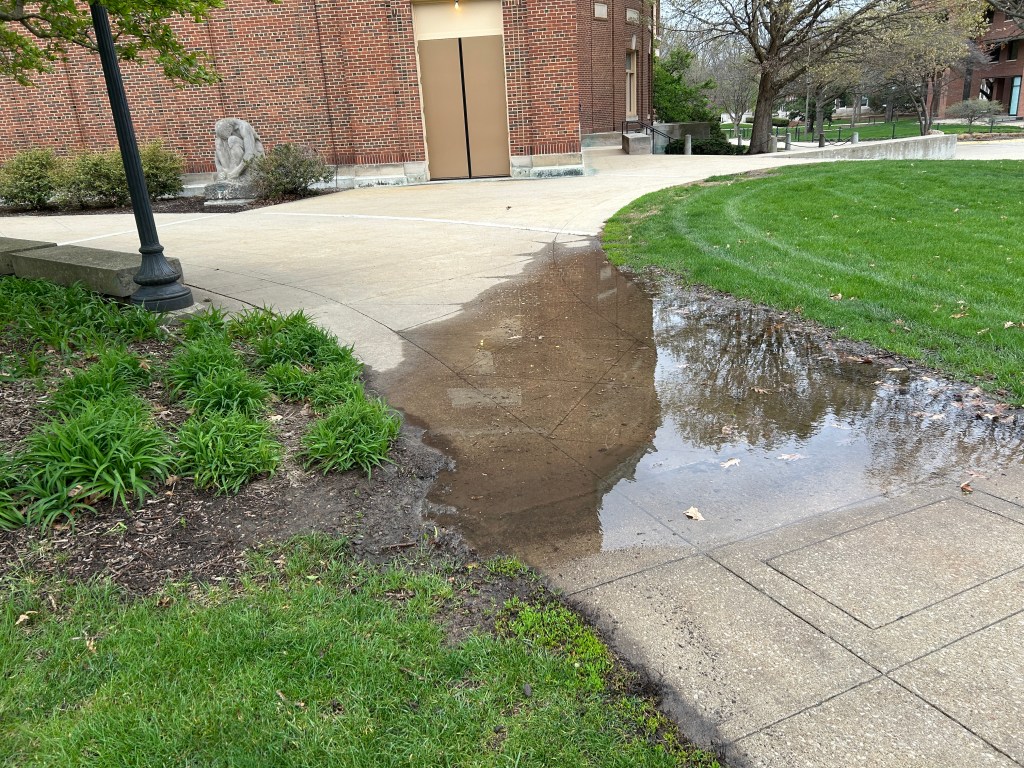
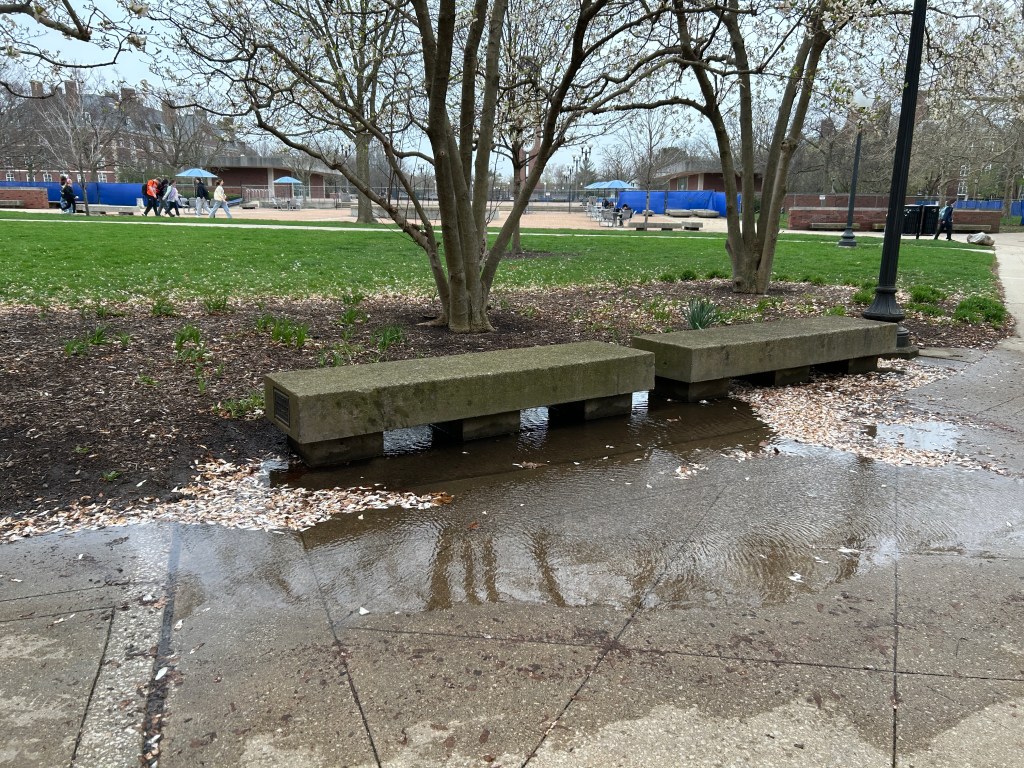
I saw an opportunity to transform the space into something both beautiful and educational. The educational component felt particularly fitting for a visible campus setting. RORG already collaborates with academic classes and student organizations for tours and volunteer work, and I wanted my project to provide similar learning opportunities to an even broader campus audience. The more people understand the benefits of GSI, the more likely they are to advocate for it elsewhere or even incorporate it into their own projects!
The Design Process
In January, I began the design phase through my capstone studio course. I started by mapping out potential basin locations and then moved on to plant selection. The Illinois Groundwork’s Plant Finder proved invaluable, allowing me to filter native plants by bloom time, moisture needs, and even color! As an added challenge, I limited myself to a color scheme of white, pink, and purple to create visual cohesion. After finalizing my plant list, I used spacing guidelines to map out each plant’s placement in my proposed garden.
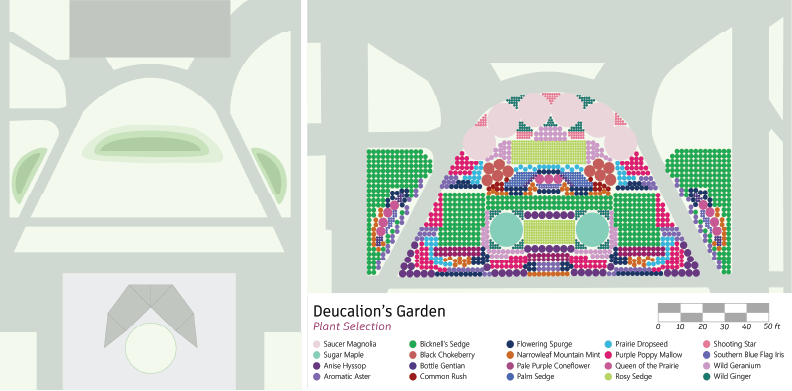
Something I’ve noticed while giving RORG tours is that space can be an issue, especially for large groups that don’t all fit on the bridge. We’re always careful to ensure that we don’t block sidewalks for pedestrians and cyclists. With that in mind, I designed a dedicated area for tours and presentations for my rain garden, which furthers the project’s educational goal. A mini amphitheater-style seating space within view of the garden allows for this without disrupting the flow of passersby. This area includes benches and shade sails to ensure comfort for visitors while they learn. Outside of tours, it could also serve as a flexible space for classes, performances, or simply extra seating.

The Poster
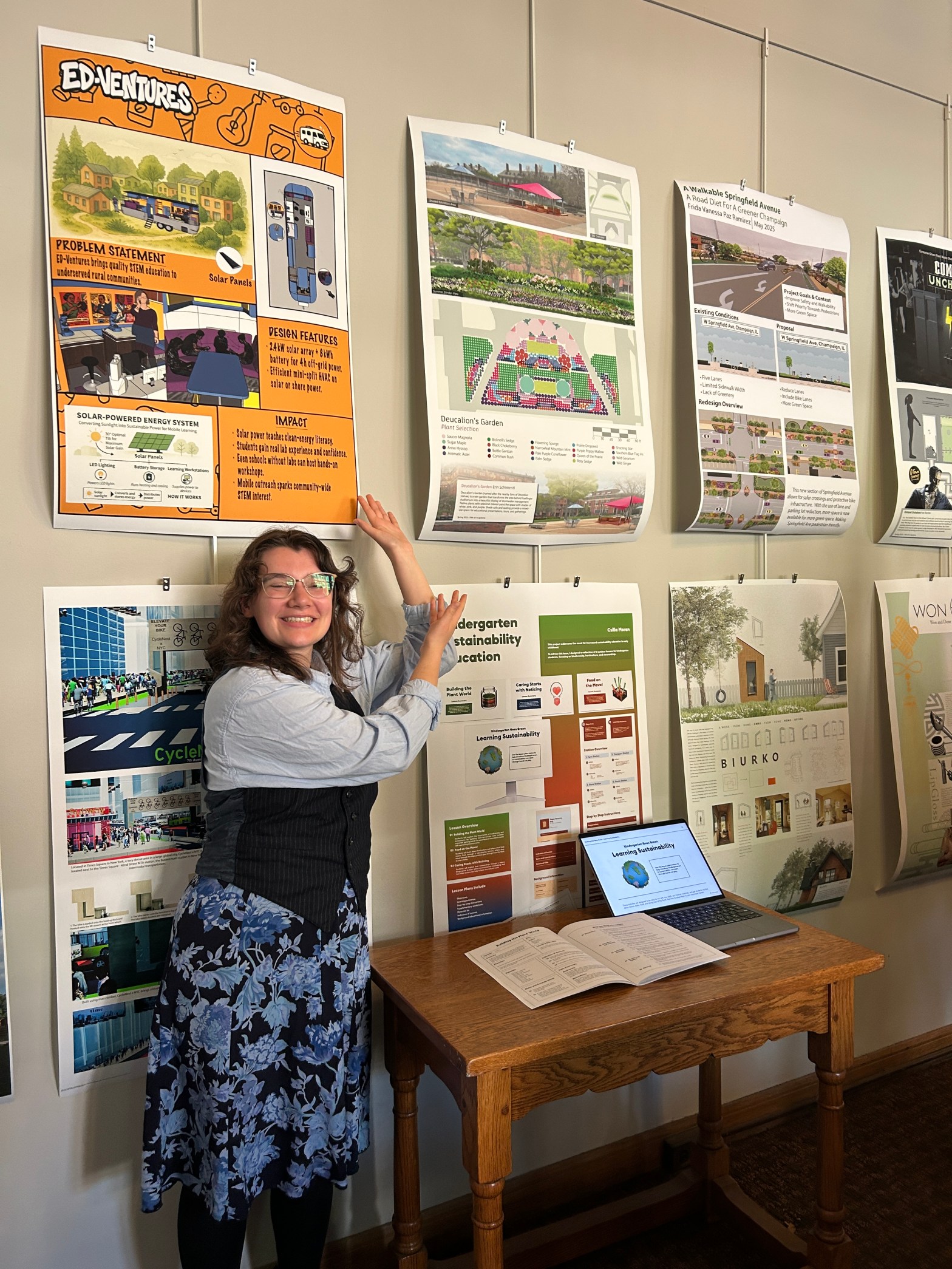
One of the main deliverables for my project was a poster, which would be displayed alongside those of my classmates as part of an exhibit at the University YMCA. I started by including some of the other materials I had created, such as the basin view and plant map, but it still felt like something was missing. I wanted to put my own personal touch on my project. So, rather than rendering my project views using 3D software, I decided to draw over some photos I took of the site using my own rendering style. This gave me greater freedom in expressing the atmosphere that I wanted to convey. I was also able to more accurately depict the plants as they would appear in late summer, since I wasn’t working from a limited bank of assets. It was an unconventional approach, but I’ve been creating botanical drawings of RORG’s species for over a year now, so in some ways, the process felt very familiar!

The very last (and arguably most difficult!) step in my design process was coming up with a name for my garden. It turns out it’s very hard to think of a name that rolls off the tongue without sounding corny! While I’m still not sure I succeeded in either of these areas, I ultimately landed on Deucalion’s Garden, after Lorado Taft’s Sons and Daughters of Deucalion and Pyrrha statues, which sit near the project site. I was elated to find that in Greek mythology, Deucalion is said to have survived a great flood. Isn’t that perfectly on theme for a rain garden?
I feel extremely proud that I was able to incorporate so much of the knowledge and skills I’ve developed throughout my time with the Red Oak Rain Garden into my capstone project. While I’m bidding farewell to my life as a college student, the principles of sustainable design will remain with me forever, and I am excited to continue incorporating them into my work!
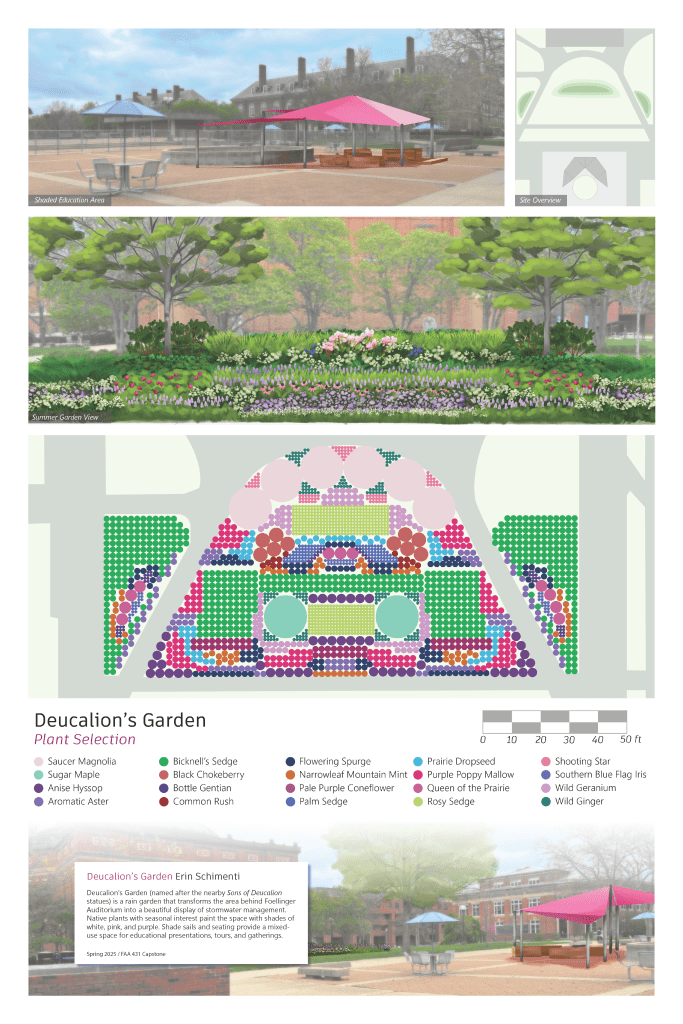

My project text is as follows:
Deucalion’s Garden (named after the nearby Sons of Deucalion statues) is a rain garden that transforms the area behind Foellinger Auditorium into a beautiful display of stormwater management. Native plants with seasonal interest paint the space with shades of white, pink, and purple. Shade sails and seating provide a mixed-use space for educational presentations, tours, and gatherings

Erin Schimenti is a recent graduate of Illinois who loves being outside and exploring the natural areas around campus. She has just recieved a dual degree in Sustainable Design and Communication. She is especially interested in green stormwater infrastructure and educational outreach. In the future, she hopes to combine art and sustainability concepts to help people become more aware of their local environments.
 Red Oak Rain Garden