By Chantal Korde, Stormwater Intern
I have always had a passion for sustainability and the natural environment, but as a chemical engineer, I have not always had many chances to work on projects relating to it. That is why I was extremely excited when I got the opportunity to work with the Illinois-Indiana Sea Grant as a stormwater intern. During my year and a half in this position, I have been able to work on exciting projects that aim to enhance sustainability, including green infrastructure reviews, interpretive signage research, and events with the Red Oak Rain Garden. Working on each of these things has given me a renewed passion for sustainability, and a deeper understanding of what it looks like in practice. But the project that gave me the best understanding of what large-scale stewardship and sustainability efforts look like is the one I have spent the most time on, which is gathering data from Illinois MS4 reports.
What is an MS4?
Municipal Separate Storm Sewer Systems, or MS4s, are basically drainage systems that are designed to convey stormwater. Some drainage systems have separate pipes for stormwater and sewage, whereas a combined sewer, as the name suggests, combines them together. There are over 300 governmental entities in the state of Illinois with separate drainage systems that meet requirements to be considered MS4 communities.
These entities hold MS4 permits and must submit an annual report to the Illinois EPA detailing the steps they have taken in their plans to reduce stormwater pollution and runoff into rivers and other waterways. The plans include six categories, called minimum measures, of practices that each MS4 community enacts: 1. Public Education and Outreach 2. Public Participation 3. Illicit Discharge Detection and Elimination 4. Management of Construction Site Runoff 5. Management of Post Construction Site Runoff (New Development and Redevelopment) 6. Good Housekeeping in Municipal Operations.
Communities go beyond compliance to better support residents
While these are the minimum requirements, many MS4 communities are going above and beyond to serve their populations. Programs like rain barrel discounts and green infrastructure grants have seen much growth throughout the years, and they have huge impacts on the communities that have them and their surrounding waterways. Rain barrel programs have increased by 16% from 2019 to 2022, green infrastructure grants have increased by 19% from 2018 to 2022, and leaf collection has increased by 13% from 2019 to 2022, with 76% of communities collecting leaves in 2022. It has been amazing to see Illinois towns take such big strides in our shared goal of having clean water.

I know this because over the past few years I have been part of an initiative by Illinois Extension’s Water and Stormwater Program to collect information from the hundreds of MS4 reports looking for key details to determine which practices are widely used, and which ones might need more development. After data collection, Extension staff analyze the information, which is published along with other stormwater information in the Illinois Nutrient Loss Reduction Strategy, a biennial report produced by the Illinois EPA in partnership with the Illinois Department of Agriculture and the University of Illinois Extension.
Rain gardens and other practices play a big role for local waterways
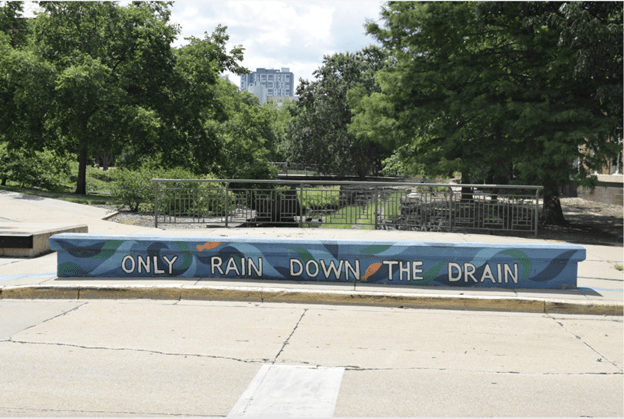
One of the best ways that towns can contribute to reducing stormwater pollution is implementing green infrastructure, like rain gardens. It is a great way to mitigate flooding, filter water, and help pollinators, all while creating a beautiful environment for people and wildlife. It also provides the community a space to enjoy while learning about green infrastructure benefits. Some Illinois communities even give grants to the public to create private rain gardens on their own properties. Having a good demonstration of a large-scale garden, like the Red Oak Rain Garden here at the University of Illinois, is a great motivator for the public, as they see green infrastructure in action.
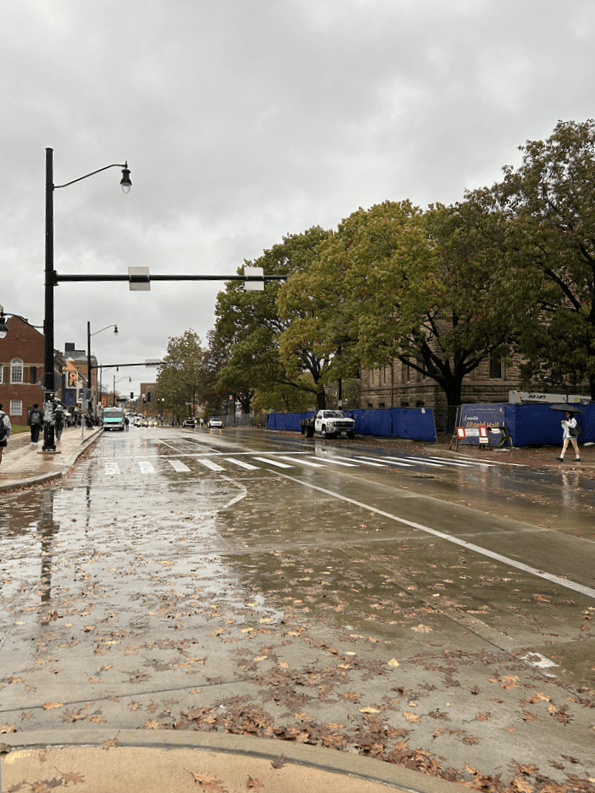
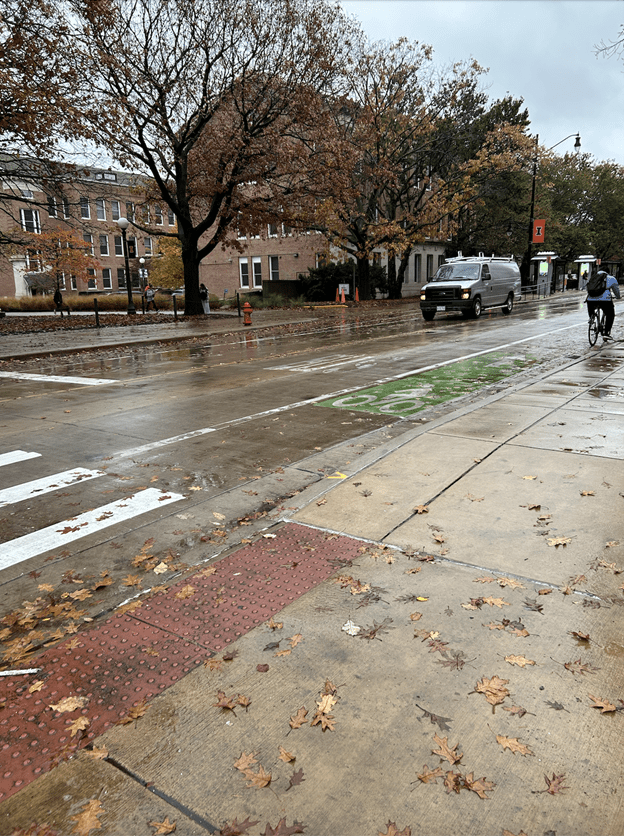
Many other programs that towns implement are equally as important, but are things I did not expect to find. Services like gathering fallen leaves in autumn and regulating the amount of salt that goes on roads in the winter prevent a lot of pollutants from entering our waterways. Fallen leaves are rich in phosphorus, which becomes an issue when they accumulate on streets. In a natural area, leaves fall to the ground and decay there, and their organic matter and nutrients become part of the soil. However, in urban areas, when leaves accumulate on streets, they instead deposit nutrients into storm drains during rainfall, where they can have a negative impact on local water quality. Similarly, while salting the streets in winter is essential for melting ice on roads for public safety, too much salt can also harm waterways and the aquatic life living in it. High salinity can lead to dehydration and death to plants and animals in waterways, and it is extremely difficult to remove. Therefore, having methods of preventing both of these problems before they begin is an important action item across Illinois.
What it means to me
Learning about the different ways that communities contribute to sustainability while also participating in efforts here in Champaign Urbana has been an invaluable experience. It has given me valuable insight into the behind-the-scenes efforts of individuals and agencies working to reduce pollution, while also renewing my commitment to improving the natural environment. Above all, it has shown me that projects and actions taken locally by individuals have the potential to add up across the state and have a real impact around the world.
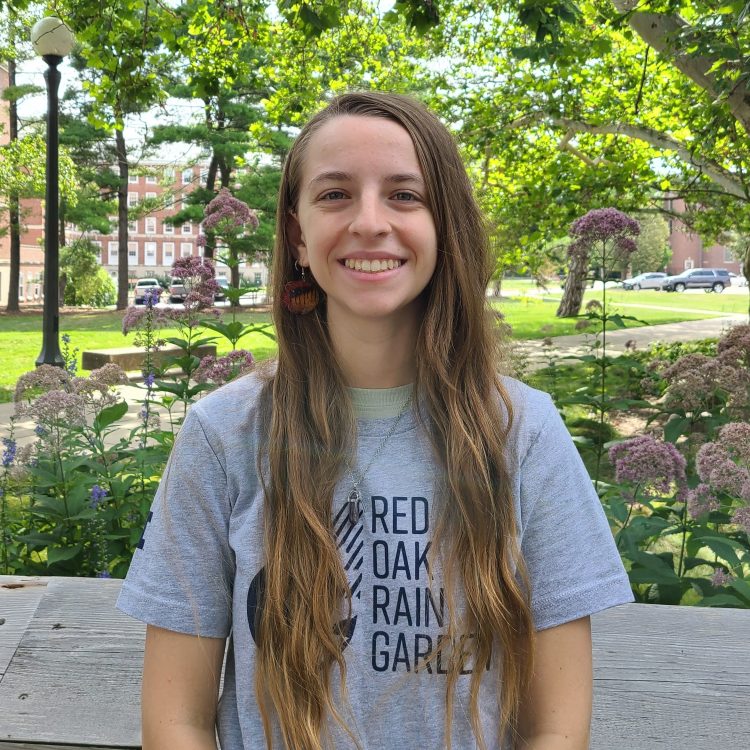
Chantal Korde is a senior majoring in chemical engineering at the University of Illinois. She is very interested in sustainability, as well as clean energy. She hopes to enter a career that improves the environment, either by removing pollution and restoring its beauty, or by developing innovative ways to help people coexist with the natural world. Some of her hobbies include reading and yoga, and she has a tuxedo cat back home.
 Red Oak Rain Garden
One thought on “Illinois communities make strides to improve stormwater”
Comments are closed.