
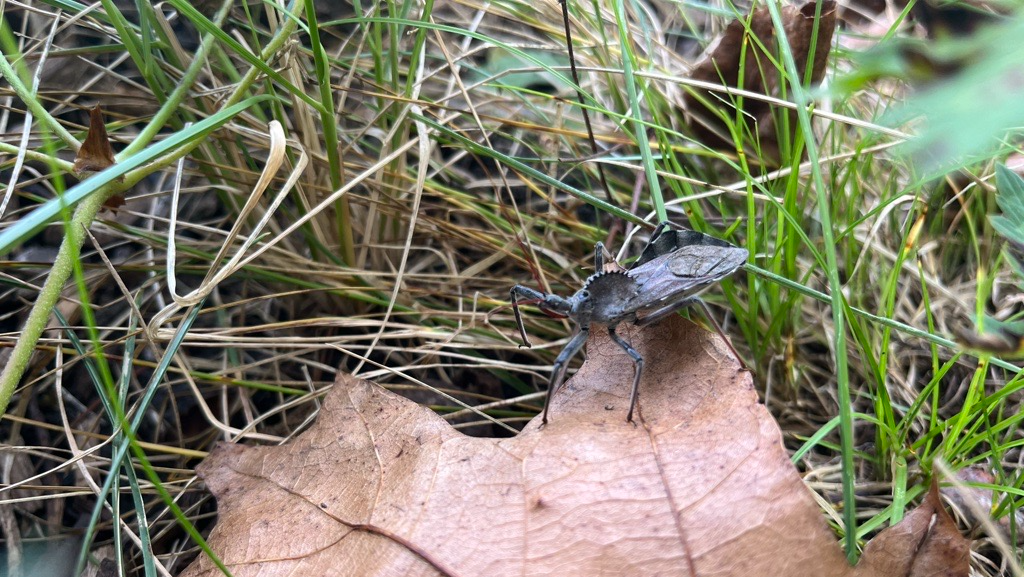
Traipsing through the jungle of sedges, climbing among wildflowers, or buzzing loudly by, the North American Wheel Bug (Arilus cristatus) is a prehistoric-looking insect you might spot in our rain garden during warmer months, aptly named for the wheel-like armor on its back. Approaching four years of my regular visiting of RORG, I can safely say that the Wheel Bugs love it here!

When I first saw a Wheel Bug, I was reading, sitting on a boulder under the Sycamore tree at RORG in early October 2021. Engrossed in my book, I almost mindlessly swished the weird feeling away. Instead, I looked down and saw this huge insect crawling up my leg!! I used my book to set her down in the Wild Ginger below and started on my research of this crazy bug that I never knew even existed.
As the biggest species of assassin bug (family Reduviidae) in North America, the Wheel Bug, as you can guess, assassinates its prey using its mouthparts that people refer to as its beak. It pierces the prey using its beak, injecting its saliva that turns the prey’s insides into a delicious soup for the Wheel Bug. You may be wondering—what happens if one bites you? Some people have allergic reactions, and some say that it hurts ten times more than a hornet’s sting! I have been keeping my distance from this cool bug since that momentous day. Unfortunately for them, the following insects could not keep their distance.
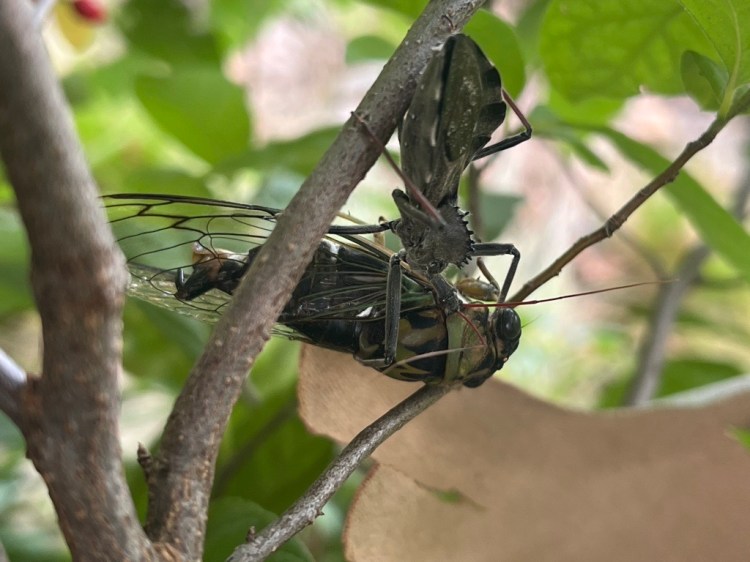
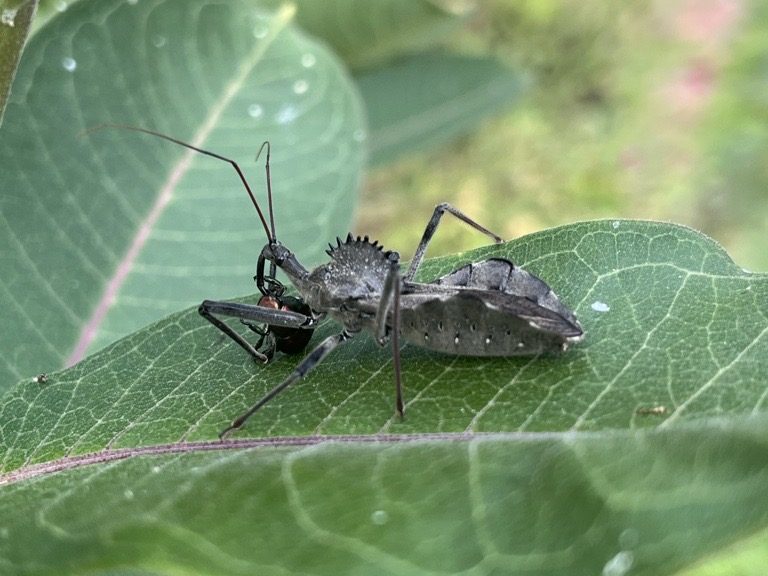
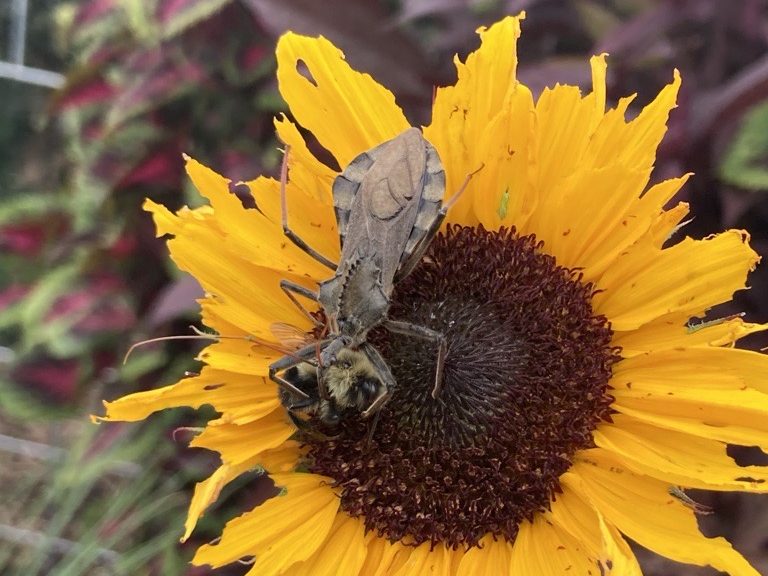
I’ve caught a wheel bug eating a cicada, a Japanese beetle, and even a bumble bee.
Now that I know these magnificent insects exist, I’m always on the lookout for them. Sure enough, I often spot them around the garden—sometimes with the help of one of RORG’s Communications Coordinator, Erin Schimenti. Over the past few years, they’ve been spotted countless times throughout the rain garden. Like us, they seem to enjoy basking on the boardwalk bridge on warm, sunny days.
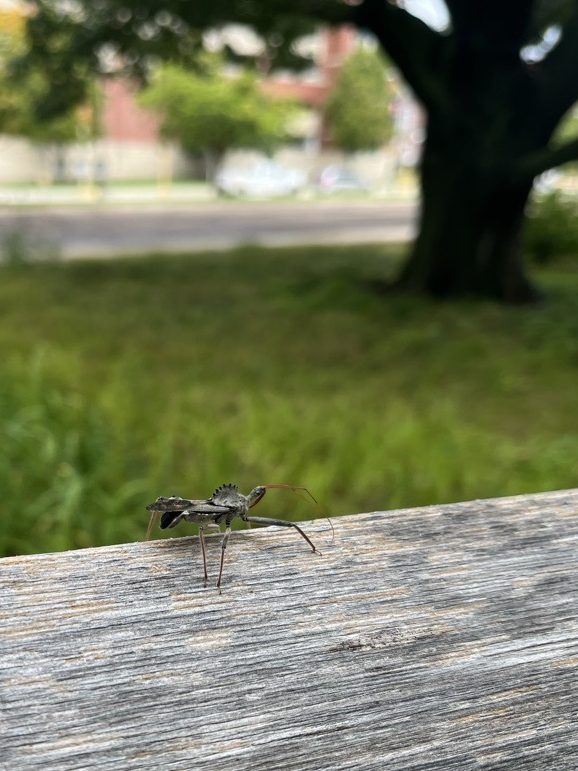
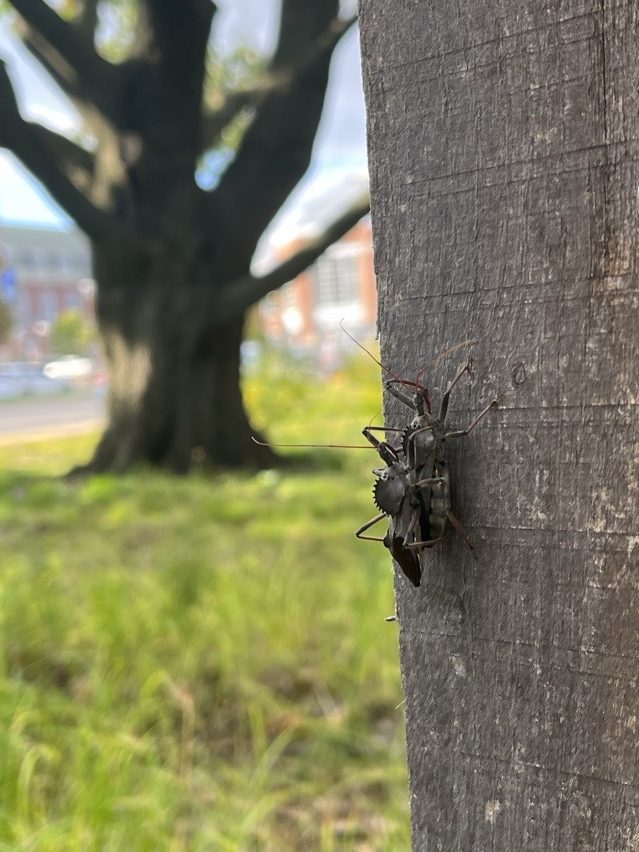
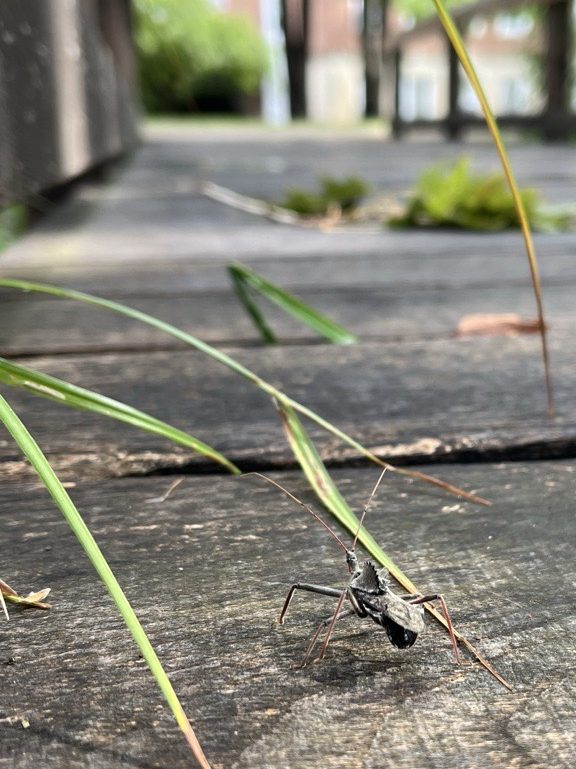
The first time I saw a mating pair, the two pictured together above, I wondered if I would see babies the next year. Sure enough, I did! I found them across the garden, in the sunny prairie. The Rosinweed patch located there is a favorite for the RORG Wheel Bugs, presumably for the other insect life that came to enjoy the plants’ beautiful flowers, sweet nectar, and crunchy leaves.
The immature Wheel Bugs have orange abdomens when they first hatch, like the first photo below. As they grow, the Wheel Bugs lose that color but do not get the wheel-like armor until their fifth instar (molting stage), when they officially become an adult.
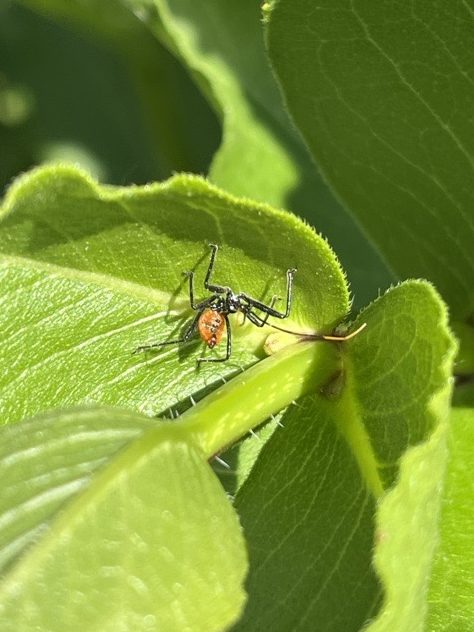
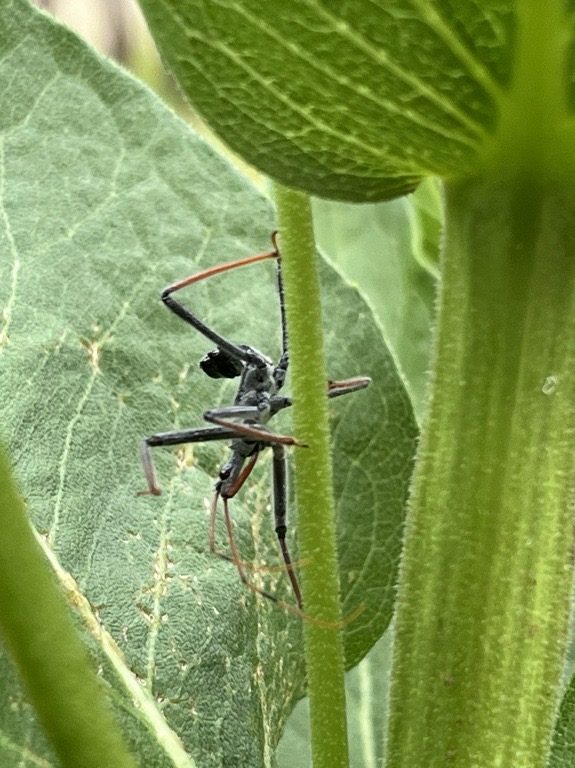

At least three of the Wheel Bug’s instars have been spotted in RORG’s Rosinweed.
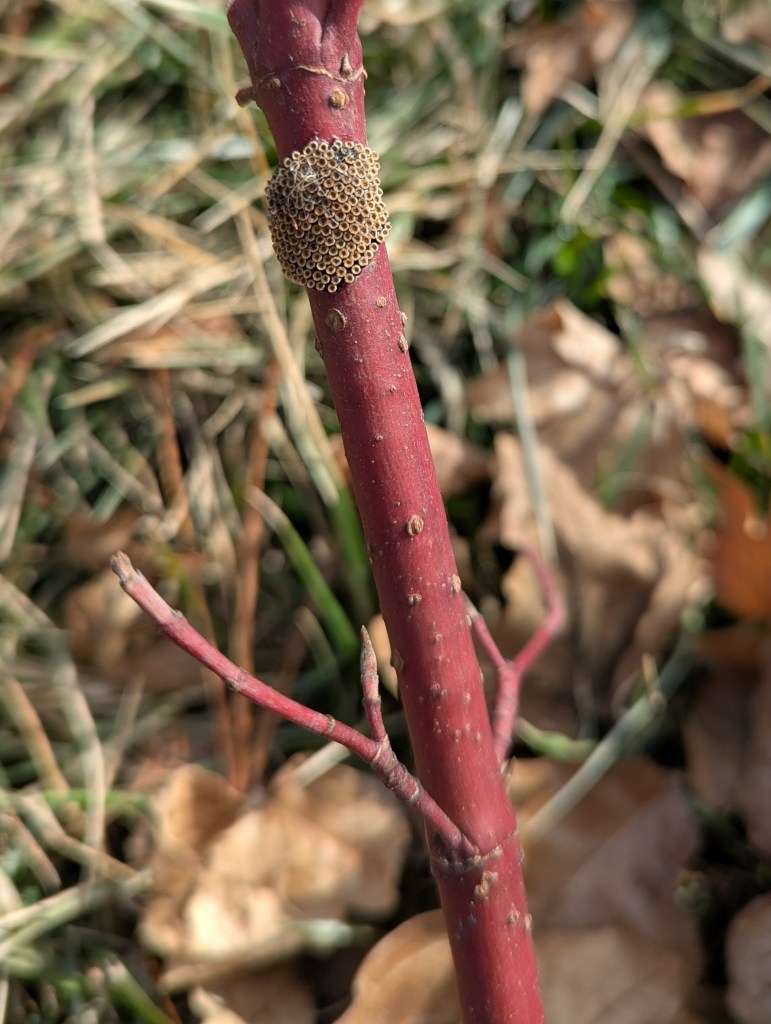
And finally, as we were pruning our Red Twig Dogwood on a warm February day this year, we found something very special: their eggs!! Friend of RORG, Dr. Lindsey Stirek, was harvesting some of the bright red twigs for creative reuse when she spotted them. We put that twig back in the garden to hopefully continue the Wheel Bugs’ life cycle. Though they are predatory, their presence indicates a healthy ecosystem: exactly what we like to see here at RORG!

Madelyn Craft is a recent graduate of the University of Illinois with a degree in Sustainable Design and minors in Landscape Studies and Natural Resource Conservation. She is most interested in native plants, green infrastructure, and environmental restoration. She implements aspects of both green infrastructure and landscape restoration to create urban spaces that are both aesthetically pleasing and environmentally beneficial in the hopes of building healthier communities. In her free time, she enjoys birdwatching and reading.
 Red Oak Rain Garden