
By Maddy Craft
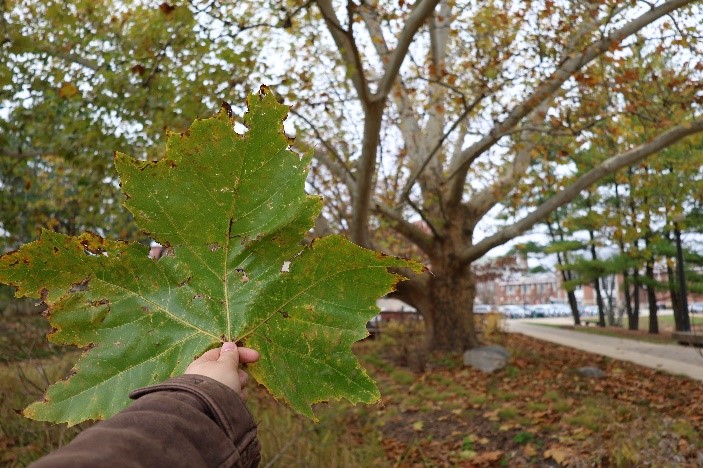
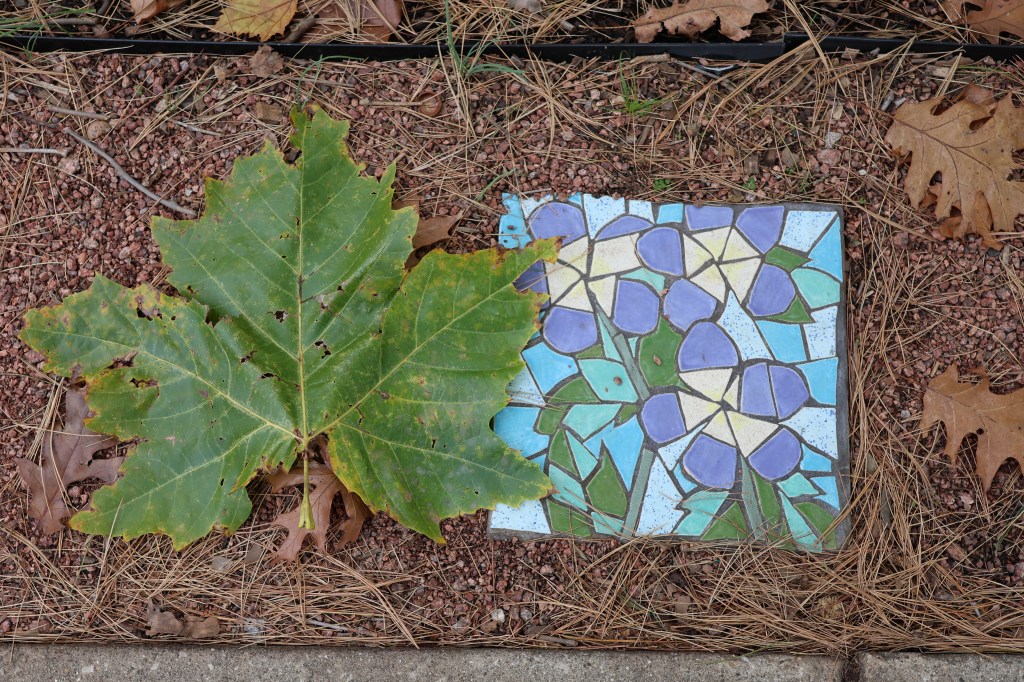
Our American Sycamore (Platanus occidentalis) that we have the pleasure of having at the Red Oak Rain Garden is an absolute beauty. Standing at over 80 feet tall, this tree is estimated to be over 100 years old. Its canopy is expansive and grows hundreds of thousands of leaves during each growing season. Every year, it gives our visitors, plants, and wildlife ample amounts of shade. These leaves, which many sources, like the USDA, state “Are 4 to 10 inches (10-25.4 cm) long,” we’ve seen that our Sycamore leaves can easily bypass that size. This photo shows one of our large Sycamore leaves side-by-side with one of the many beautiful ceramic tiles that border our rain garden for scale. The tile size is 12” x 12”, and this leaf is even larger than that!
By late October, our Sycamore starts to drop her leaves over the rain garden and the surrounding area. There are numerous benefits to leaving leaves, from creating habitat for overwintering insects to having healthier soil from leaf decomposition. However, there is an issue we have discovered with our Sycamore leaves: they do not decompose quickly.
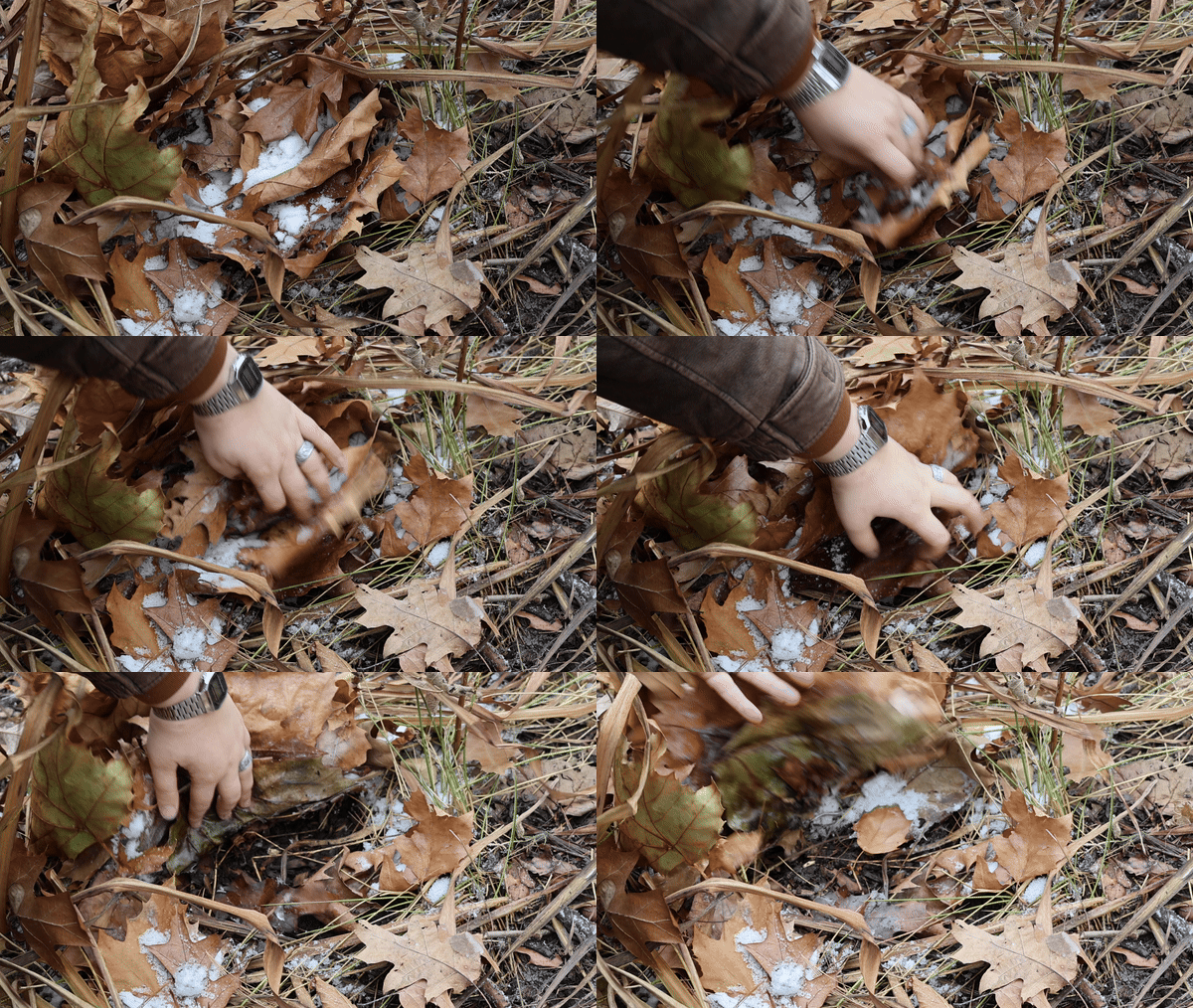
Over the winter of 2019-20, the first winter following the renovation, we left all our leaves to decompose through the winter. Our monitoring revealed that they did not do much decomposing. Instead, moisture from the season’s snow became trapped between the layers of Sycamore leaves, which seemingly stayed as thick and leathery as they were the day they dropped! Further, research literature shows that nitrogen in Sycamore leaves becomes immobilized which slows down decomposition rates. At RORG, overwintered Sycamore leaves caused some of our plants to be smothered come spring, limiting their ability to thrive.
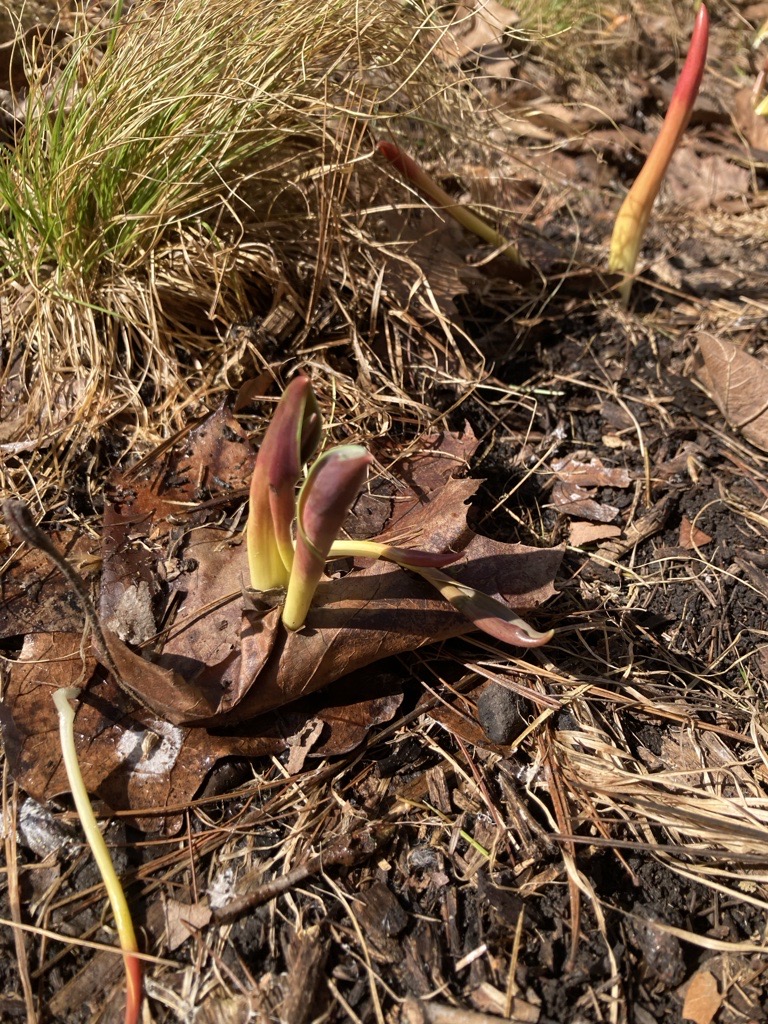

Tulips and Virginia Bluebells are some of our first-growing plants of the year. The tulips on the left had to grow through layers of Sycamore leaves, while the ones on the right did not.
To limit this, we have had to adapt our maintenance plan. First, we discussed the issue with Illinois Extension Pollinator Expert, Brodie Dunn, and we learned that we must have a balance on the amount of leaves we have in the garden, to be beneficial to both overwintering insects and our plants themselves. Our intent is to balance leaf removal that ensures our plants flourish while maintaining a leaf layer in other areas of the rain garden to support our pollinators and other insects through the long, cold winter.
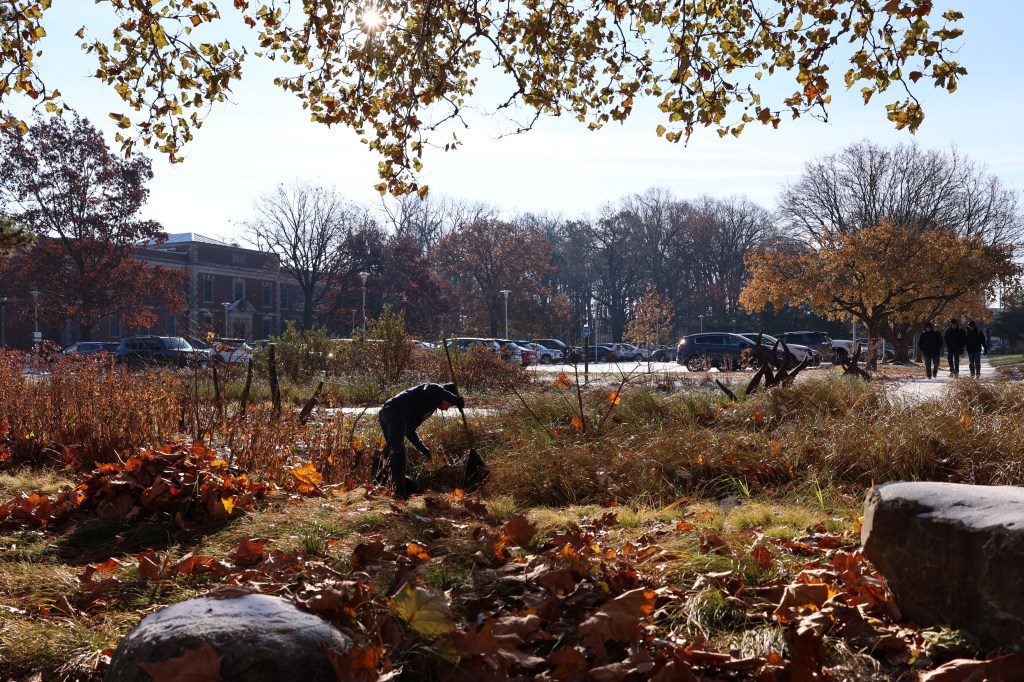
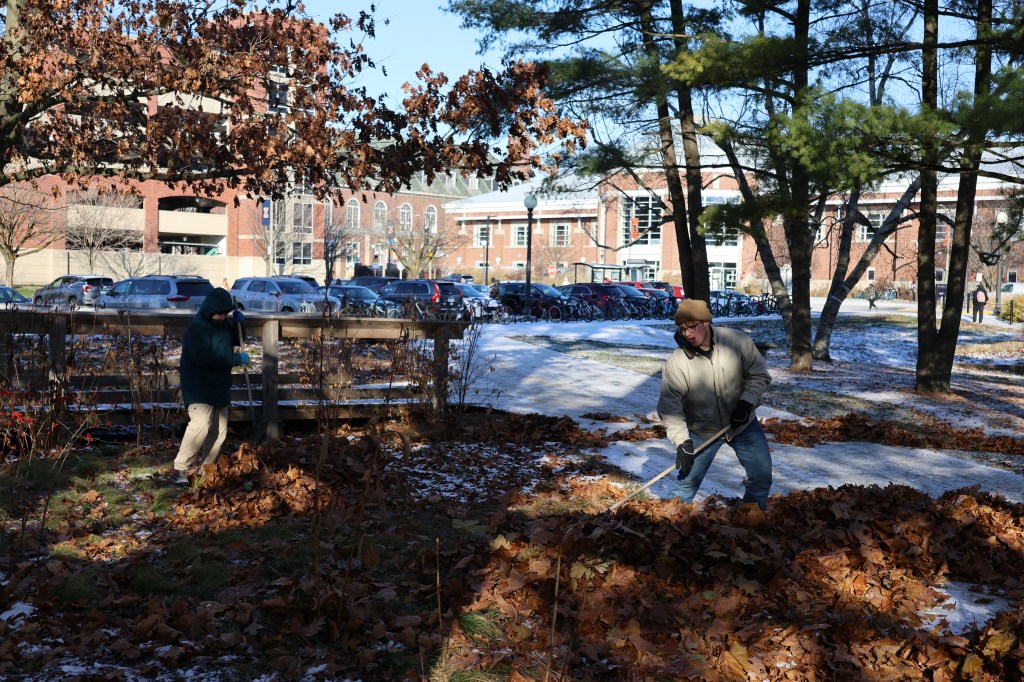
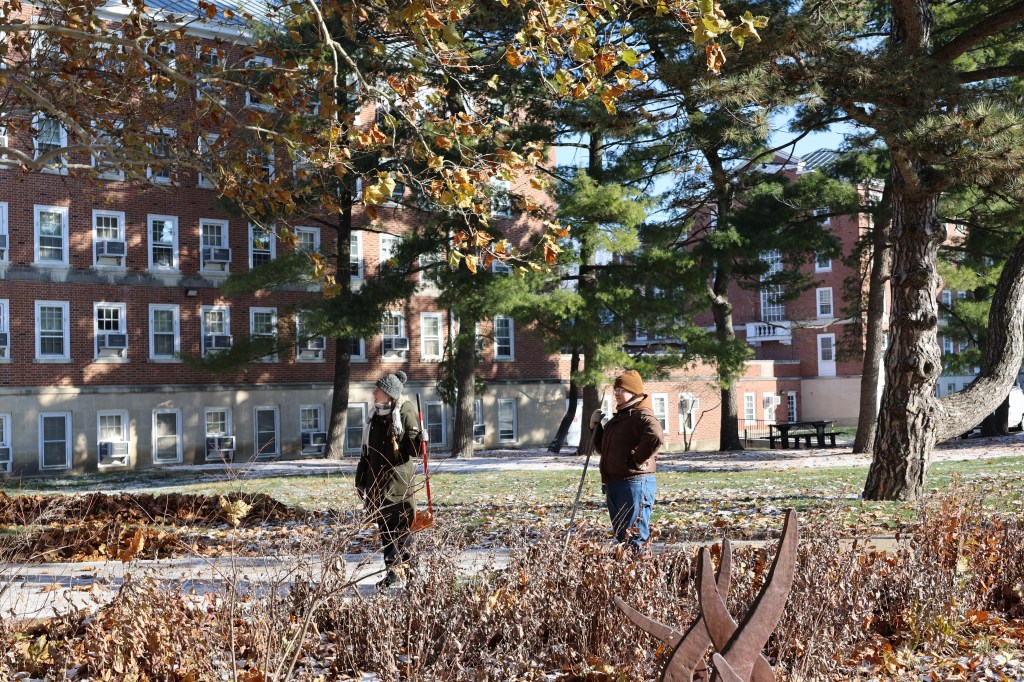
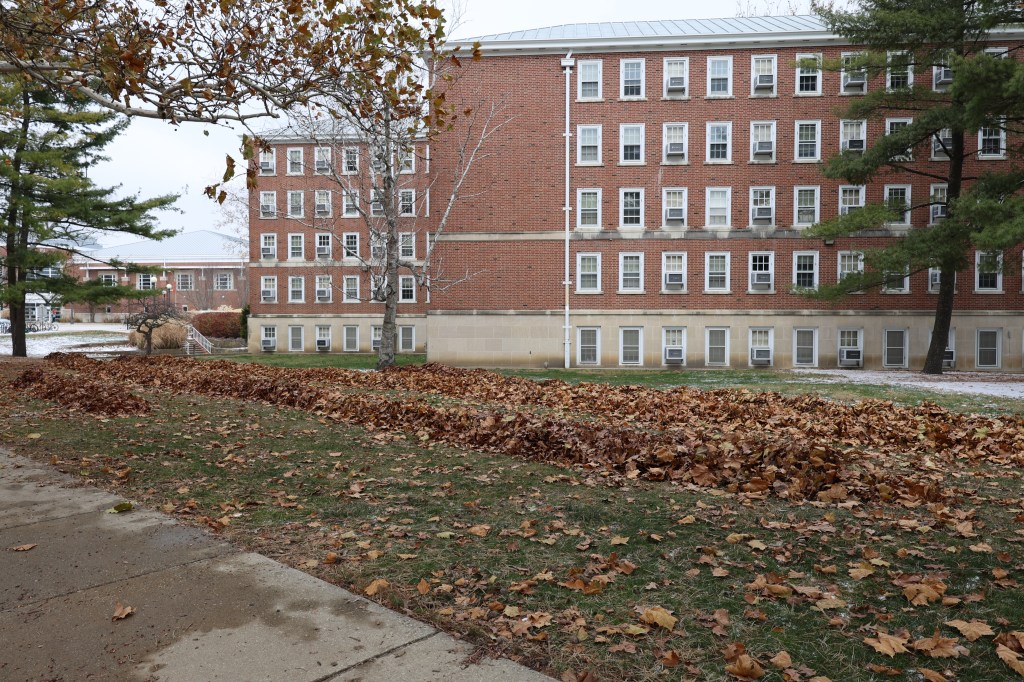
This past week, we held our annual Fall Cleanup event, where volunteers helped us remove some of the leaves that had fallen in the rain garden to be mulched in Allen Hall’s nearby lawn with Facilities & Services’ help. The key word is “some”. We definitely leave many leaves, but to keep a balance, not all the leaves. We believe in science-based, thoughtful care at RORG that yields the most benefit for our plants and the pollinators they support.
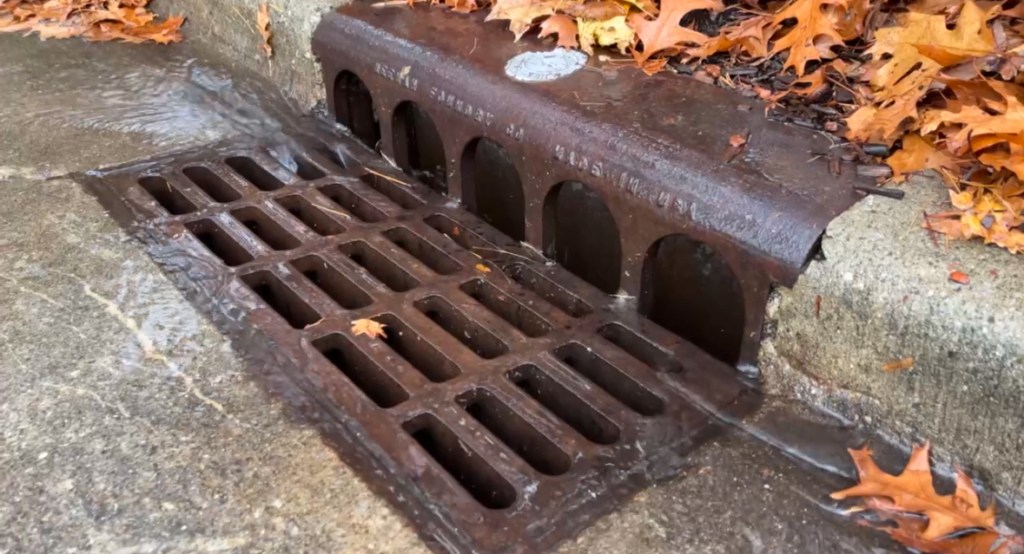
Please note: during our workdays, we remove every leaf from the Allen Hall parking lot storm drain. This is a recommended practice to prevent leaves from leaching phosphorous into nearby waterways and ensures that roads stay dry.
We appreciate our incredible volunteers and collaborators for making everything possible! And, of course, a big thank-you to our amazing trees for all the invaluable eco-services they provide!
 Red Oak Rain Garden
One thought on “RORG’s Fall Leaf Approach: Finding the Balance”
Comments are closed.