
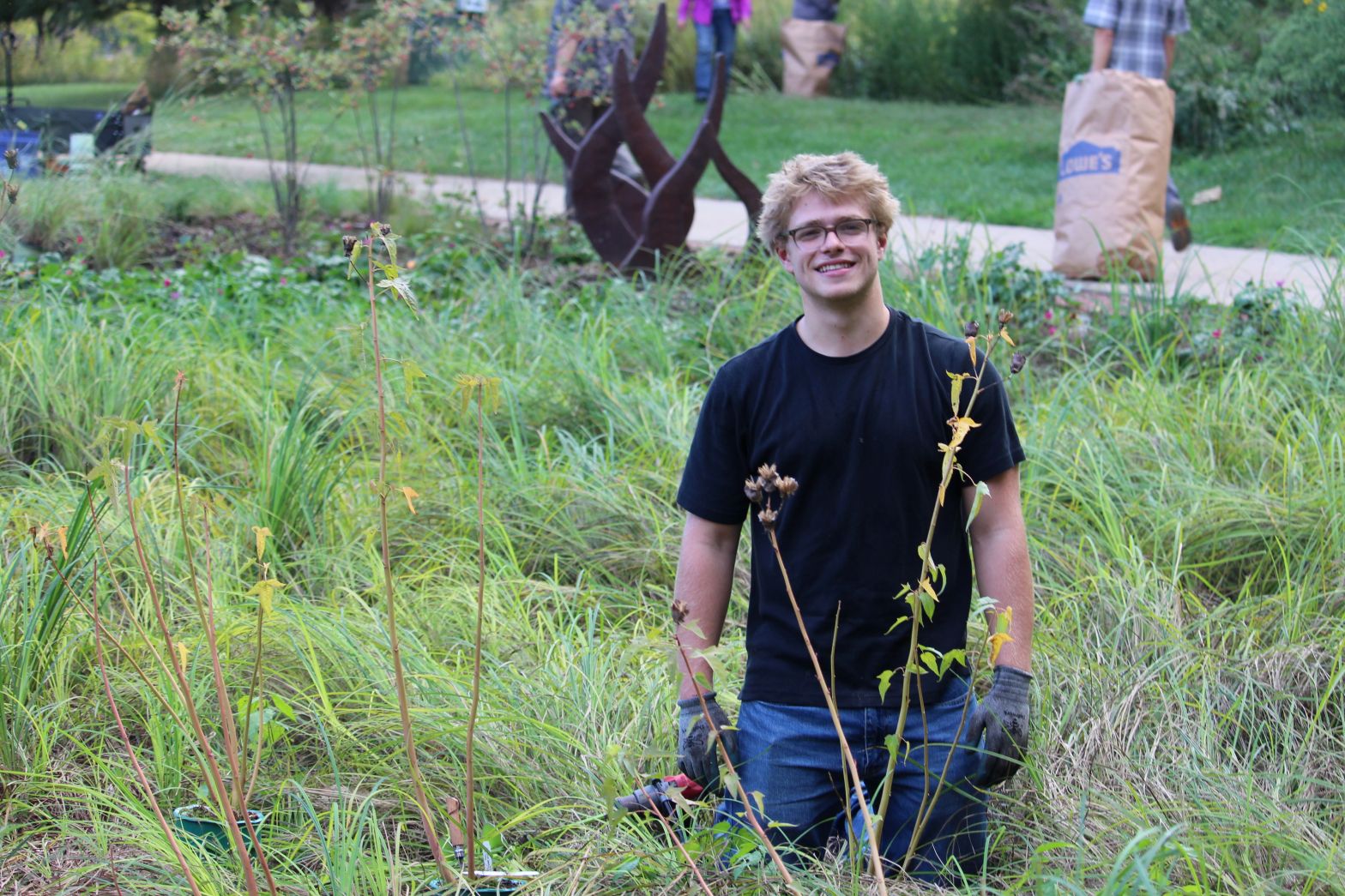
By Joe Hinsberger, RORG Sustainability Intern
Throughout my life, I’ve sought to connect with nature and have often thought about how to center my life around it after college. As I got older, I discovered a passion for designing things, and I realized I actually didn’t mind math, which led me to pursue Civil and Environmental Engineering. Working at the Red Oak Rain Garden has given me a chance to learn and apply technical skills while connecting with nature on a weekly basis. This hands-on experience has not only deepened my understanding of green infrastructure but also shown me how engineering can support and enhance natural systems. Through this blog post, I want to share my journey at the rain garden, what I’ve learned, and how it’s shaping my path in environmental engineering.
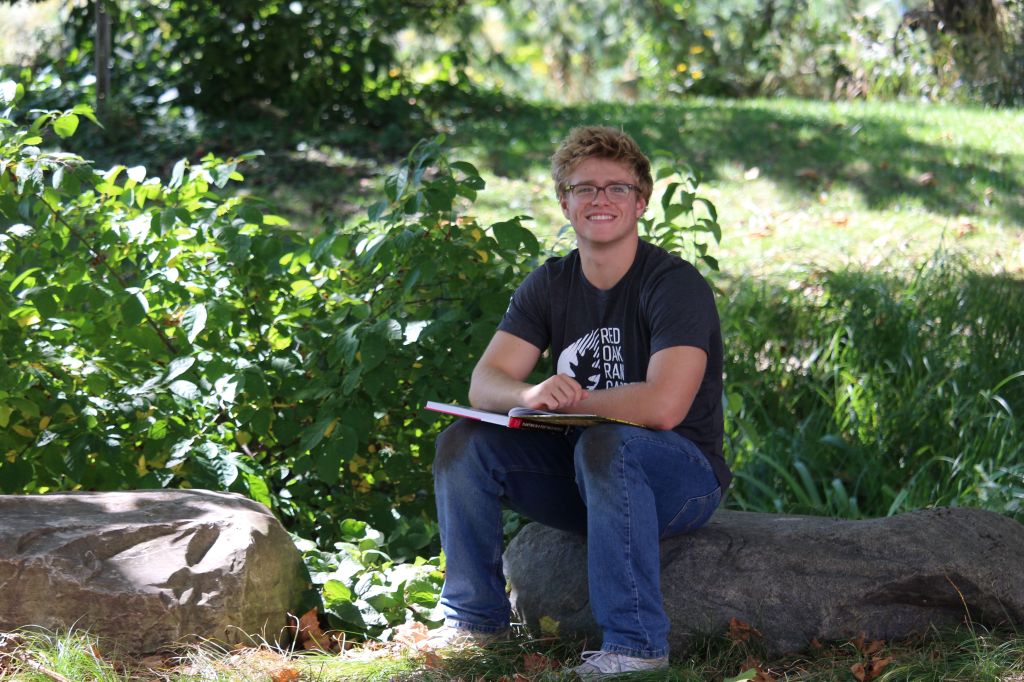
Getting to Know the Red Oak Rain Garden
The Red Oak Rain Garden is more than just a landscape feature on campus; it’s a model of how thoughtful design can manage stormwater while promoting biodiversity. With the need to balance aesthetics, ecology, and utility, this is far from a typical garden.
One of the first things I noticed is why it’s called an organization. On my first day at RORG, during the 2024 spring cleanup, I immediately saw the level of planning and coordination required for a workday like this. I later learned that this level of organization is essential when managing a large rain garden. There’s a lot of expertise needed to best educate volunteers, some of whom aren’t as practiced with this kind of stewardship. From plant identification to teaching someone how to properly rake around sensitive plant species, there’s much to know and our volunteers are eager to participate in service learning. I’m constantly impressed by the variety of backgrounds among the people involved in the garden, from landscape design and environmental engineering to art and Natural Resources and Environmental Sciences. This multi-disciplinary blend creates a unique learning environment, especially compared to the engineering-focused spaces I’m usually in.
Learning Through Hands-On Work
One of the best parts of working in the rain garden is gaining hands-on experience with the systems I’m studying. For example, I’ve learned about:
Stormwater Management:
RORG’s primary goal is to absorb and filter stormwater, reducing flooding and runoff that would otherwise burden campus drainage systems or flood sidewalks and lawns. To me, a fascinating thing about RORG is its scale. While most residential-scaled rain gardens are relatively small, RORG really acts as local infrastructure. It demonstrates that solutions to flooding don’t have to rely solely on conventional gray infrastructure, like storm sewers. Knowing that Civil and Environmental Engineering grad students and professors plan to use various sensors to collect data on-site has shown me that RORG isn’t only functional but is also a model for future large-scale projects on campus and across Illinois. It gives me even more confidence that green stormwater infrastructure will play an important role in preparing midwestern communities for changing weather conditions.
Native Plant Species:
The rain garden is filled with native plants, which play a crucial role in water management and supporting a healthy ecosystem. Learning to identify and care for these plants has highlighted the importance of considering biodiversity in engineering projects. These beautiful plants not only provide habitat for native species but are also highly effective at their intended tasks—their deep tap roots enable excellent soil infiltration and resilience to both wet and dry conditions.
Engineered Soil:
The soil determines how fast a rain garden acts as a sponge, soaking in excess stormwater, which helps reduce flooding]. I’ve gained practical insights into the role of soil composition. Specifically, I learned about the soil amendment of 70% sand used in the sunny cell, which I hadn’t considered as an option for stormwater management before. This knowledge has carried over to other aspects of my engineering journey; for one of my classes, I’m conducting a cost-benefit analysis of a rain garden with amended soil compared to one with regular soil.
Conclusion
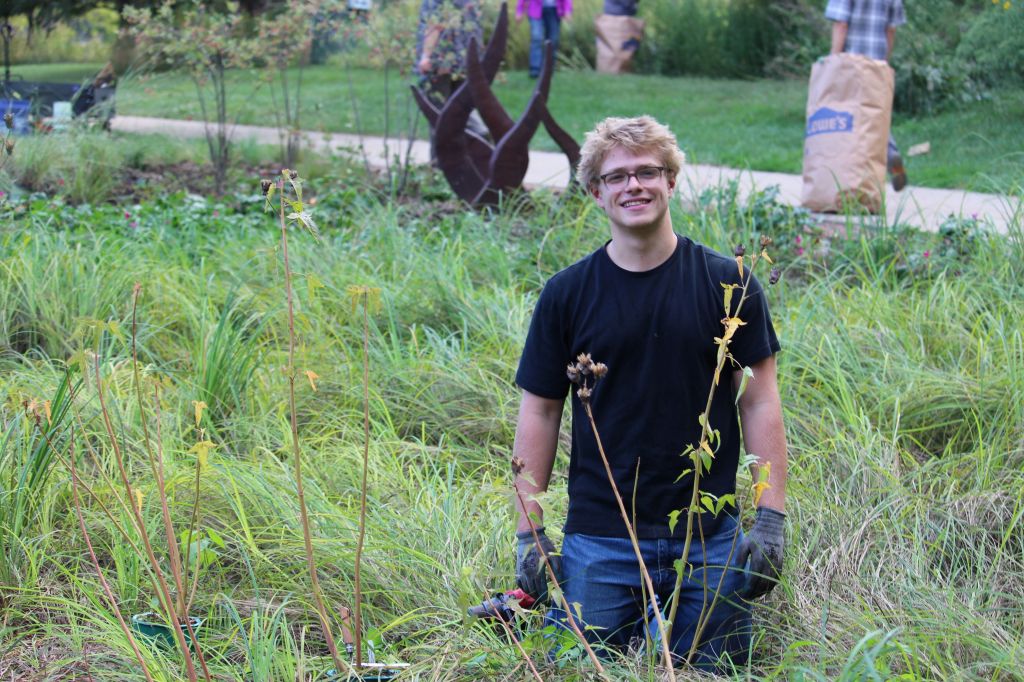
Working at the Red Oak Rain Garden has been a rewarding experience that has strengthened my passion for environmental engineering. This project has been a reminder of why I chose this field—to make a positive impact on the world by blending engineering with nature. I’m excited to continue learning and growing, knowing that every skill I gain brings me one step closer to contributing to a more sustainable future.

Joe is a sophomore studying Civil and Environmental Engineering at Illinois. He is passionate about expanding access and connection with nature, especially in urban environments. He is the first RORG Student Team member to receive course credit through ENVS 491: Sustainability Experience. In his free time, he enjoys working out and hiking.
 Red Oak Rain Garden
One thought on “The Intersection of Engineering and Nature at the Red Oak Rain Garden”
Comments are closed.